


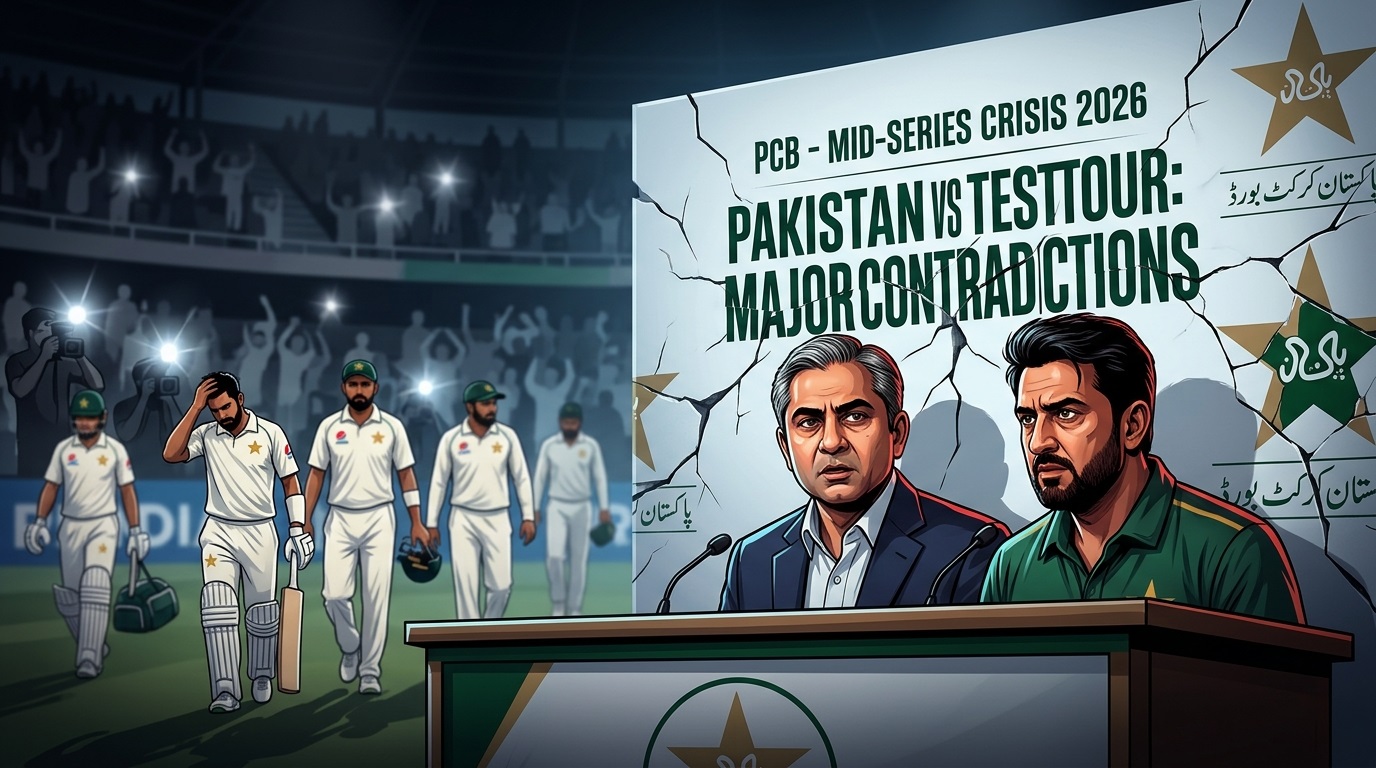
PCB Mid-Series Crisis 2026: When the Pakistan Cricket Board (PCB) leadership promised a radical administrative “surgery” following an early exit from the 2024 T20 World Cup, fans anticipated a structured, long-term athletic overhaul. Fast forward two and a half years to the PCB mid-series crisis 2026, and that promised surgery has escalated into an unprecedented mid-tour intervention. During an ongoing Test series against England, seven senior national players were abruptly recalled home, the head coach and bowling coach were dismissed overnight, and emergency replacements were flown across continents.
Rather than restoring stability, public statements from PCB Chairman Mohsin Naqvi and High Performance Director Aaqib Javed have exposed severe institutional contradictions. When administrative actions directly counter official statements, high-performance sports management breaks down.
Understanding the PCB mid-series crisis 2026 requires evaluating six major managerial contradictions, examining their impact on player psychology, and reviewing a strategic roadmap for structural reform in Pakistan cricket.
The Chronology of Instability: From “Surgery” to Mid-Tour Recall
Pakistan cricket governance over the past two years shows a clear pattern: emergency interventions repeatedly substitute for long-term planning. The timeline below illustrates how short-term reactions created the PCB mid-series crisis 2026.
[June 2024] ──> T20 World Cup Exit: Chairman Mohsin Naqvi promises systemic "surgery".
[Late 2024] ──> Resets & Committee Changes: Repeated reshuffling of selection panels and coaches.
[Mid 2025]  ──> White-Ball Focus: Gains in ODI and T20I rankings mask red-ball preparation gaps.
[July 2026] ──> Tour Selection: A 17-member Test squad is selected on "clear merit and form".
[August 2026] ─> Mid-Series Purge: 7 players recalled; head coach & bowling coach dismissed.
[Sept 2026] ──> Public Defense: Naqvi & Aaqib deliver conflicting explanations in media appearances.
When an administration operates without a clear multi-year strategy, every defeat becomes an organizational emergency. The PCB mid-series crisis 2026 represents the peak of this reactive management cycle.
1. Merit Selection vs. Emergency Purge
The first major contradiction in the PCB mid-series crisis 2026 lies in how the tour squad was initially defined versus how it was discarded.
Before departure, chief selector Aaqib Javed defended the 17-member squad, stating that every player was selected strictly on merit, fitness, and recent performance. The selection panel claimed complete ownership of the roster.
Initial Official Stance: "The 17-member team was formed on clear merit... we stand ready to take responsibility."
Mid-Series Stance: "When performance is simply not coming, making this decision improves your image."
However, after poor team performances in the early Test matches, seven players were recalled mid-tour. Officials argued that waiting until the end of the series was unacceptable.
Key Takeaway: You cannot claim a squad was rigorously vetted on merit while simultaneously asserting that their sudden performance drop required an immediate emergency purge. Either the initial vetting was flawed, or the leadership abandoned its own selection process under media pressure.
2. Owning the Squad vs. Blaming On-Tour Management
Institutional accountability requires clear boundaries between team selection and on-field strategy. During the PCB mid-series crisis 2026, these boundaries became blurred.
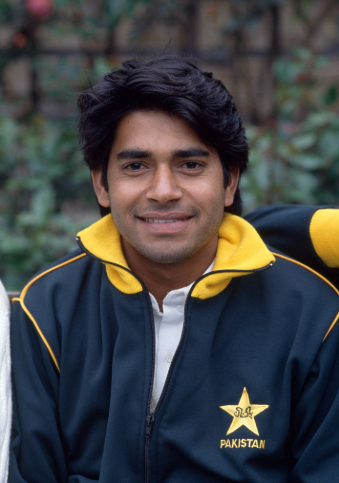
Aaqib Javed attempted to separate selection panel duties from match-day tactical decisions:
- Selectors’ Role: Selecting the 17-player squad in consultation with the captain and head coach.
- Management’s Role: Selecting the final 11 players and managing pitch conditions.
When bench options like pace bowler Ubaid Shah were not selected in the playing eleven, the board issued official show-cause notices to selection committee members regarding senior player inclusions.
| Governance Level | Claimed Responsibility | Actual Administrative Action |
| Board Leadership (Chairman) | Overall institutional accountability. | Dismissed coaching staff mid-tour; issued public statements on individual form. |
| Selection Committee | Owns initial 17-player squad assembly. | Served show-cause notices; questioned over original player selections. |
| On-Tour Management | Directs match tactics and final playing XI. | Fired mid-series before completing the assigned Test tour. |
This dynamic creates a cycle where selectors blame coaches for tactical failures, coaches blame selectors for unconvincing squad depth, and board leadership penalizes both publicly.
3. Protecting Player Morale vs. Public Demotion
Maintaining player confidence is essential during high-pressure overseas tours. Chairman Mohsin Naqvi emphasized this publicly:
“I will not allow anyone to blame the players for the sake of it. Stop demotivating the players. It is unfair.”
At the same time, the board executed public, mid-series player removals.
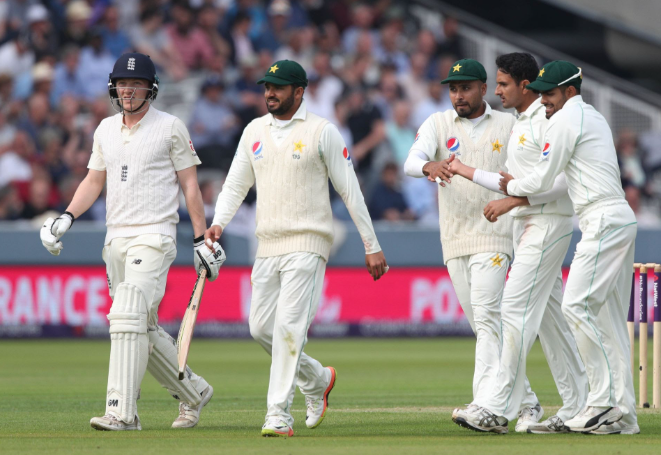
When an administration sends senior players like Salman Ali Agha back home mid-tour while public comments question their commitment and fitness, it directly undermines player confidence. Dropping players publicly while telling the press they are being “shielded” creates an environment of anxiety across the entire squad.
4. White-Ball Progress vs. Red-Ball Collapse
To deflect criticism during the PCB mid-series crisis 2026, board leadership highlighted ranking improvements in limited-overs formats:
- ODI Ranking: Improved from 8th to 5th place globally.
- T20I Success Rate: Increased to 73% under the current administrative setup.
While white-ball progress is notable, using limited-overs metrics to justify a breakdown in Test cricket exposes a core operational flaw.
┌─────────────────────────────────────────────────────────┐
│              PCB DUAL-FORMAT PERFORMANCE MATRIX          │
├──────────────────────────┬──────────────────────────────┤
│ White-Ball Formats       │ Red-Ball Test Cricket        │
├──────────────────────────┼──────────────────────────────┤
│ • High boundary frequencies │ • Multi-day stamina requirements │
│ • Aggressive pacing      │ • Structural defensive technique │
│ • Short tactical windows │ • Long-term pitch adaptation │
└──────────────────────────┴──────────────────────────────┘
Test cricket requires long-term planning, patient talent development, and stable selection. Success in 20-over or 50-over formats does not replace the structural support needed for 5-day Test matches. Dismantling a Test squad mid-series confirms that short-term limited-overs success cannot mask deep red-ball vulnerabilities.
5. Claiming Open Accountability vs. Dismissing External Criticism
Effective institutional leadership requires accepting constructive criticism. Board leadership publicly stated:
- “I have never been afraid of criticism, and I never will be. The board is ultimately answerable for results.”
However, when former national players and sports journalists raised concerns about the mid-series recall, the board dismissed many of these voices as unqualified or self-interested.
Open Accountability (Principle): Welcoming public scrutiny and accepting responsibility for failures.
Dismissive Response (Practice): Labeling critics as "former players who achieved nothing" to invalidate feedback.
Validating criticism only when it comes from select sources limits the feedback needed to correct institutional errors. True accountability requires listening to critical perspectives across the sports landscape.
6. Preaching Continuity vs. Normalizing Instability
The final contradiction driving the PCB mid-series crisis 2026 is the disconnect between praising administrative stability and repeatedly resetting personnel.
While leadership frequently speaks about building long-term academy networks and modernizing high-performance infrastructure, their operational decisions tell a different story:
- Multiple head coach resignations and dismissals within two years.
- Repeated reshuffling of selection panel members.
- Frequent changes to team captaincy across formats.
- Emergency mid-series player recalls during major overseas tours.
When administrative restructuring becomes routine, instability becomes the baseline. Players and coaches begin operating in survival mode, prioritizing short-term self-preservation over long-term strategic development.
The Strategic Roadmap: How the PCB Can Resolve Institutional Instability
Resolving the PCB mid-series crisis 2026 requires moving away from reactive decision-making and implementing clear institutional reforms.
          [PCB REFORM FRAMEWORK]
                     │
    ┌────────────────┴────────────────┐
    ▼                                 ▼
[STRUCTURAL SEPARATION]      [CONTRACTUAL SECURITY]
Independent Selection        Protected Multi-Year
Committee Autonomy           Coaching Tenures
    │                                 │
    └────────────────┬────────────────┘
                     ▼
          [RED-BALL DOMESTIC PIPELINE]
          Dedicated First-Class Pitch
          & Ball Standardization
1. Establish True Selection Committee Independence
- Policy: Remove board executives and political appointees from direct selection choices.
- Execution: Empower an independent, data-driven selection committee with fixed two-year terms that cannot be overridden mid-series.
2. Protect Coaching and Support Staff Tenures
- Policy: Enforce contractual guarantees for technical, tactical, and fitness staff.
- Execution: Prohibit mid-tour coaching terminations unless serious contractual breaches occur. Evaluate coaching performances at the end of complete series cycles.
3. Build a Dedicated First-Class Test Pipeline
- Policy: Separate red-ball and white-ball player development tracks in domestic cricket.
- Execution: Standardize first-class pitch conditions, match balls, and workload monitoring so players transition seamlessly to international Test conditions.
Frequently Asked Questions
What triggered the PCB mid-series crisis 2026 in England?
The crisis was triggered when the PCB recalled seven senior players and dismissed the head coach and bowling coach mid-way through an ongoing Test series against England. This unprecedented decision followed early match losses, sparking widespread debate over selection stability, team management, and board governance.
Who are the primary PCB officials involved in recent selection decisions?
PCB Chairman Mohsin Naqvi and High Performance Director / Chief Selector Aaqib Javed hold the primary administrative authority. Naqvi oversees broader board policy and executive decisions, while Aaqib Javed manages high-performance operations, squad selection parameters, and technical team alignments across national squads.
Why was Salman Ali Agha recalled during the Test series against England?
Salman Ali Agha was recalled mid-series due to prolonged batting form issues and fitness concerns. However, the decision drew criticism because board officials publicly discussed his physical condition and performance struggles while simultaneously claiming to protect player morale from external scrutiny.
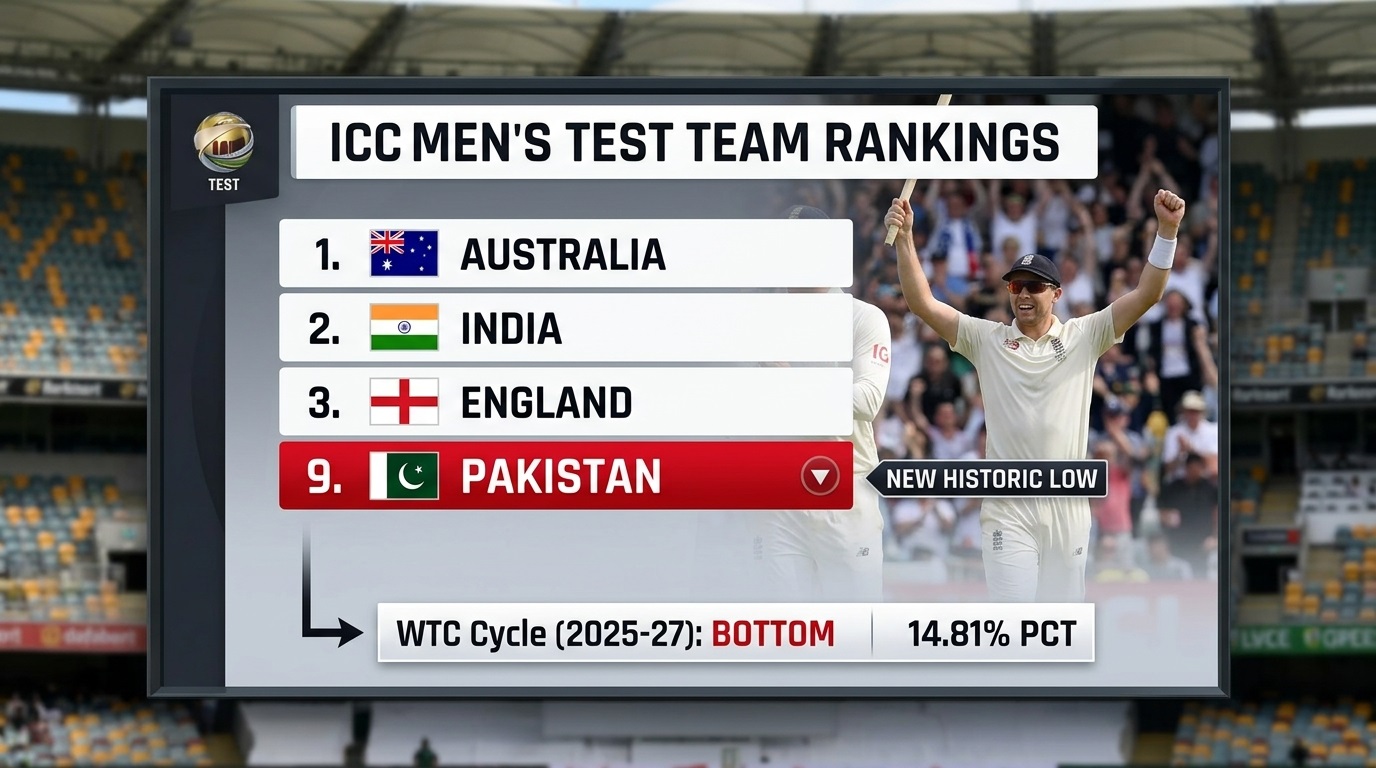
How does the PCB mid-series crisis 2026 impact Pakistan’s ICC Test rankings?
Frequent mid-series squad purges disrupt team continuity, combinations, and player confidence in five-day cricket. While Pakistan has shown ranking gains in white-ball formats (ODIs and T20Is), ongoing red-ball instability has hindered performance in the ICC World Test Championship standings.
Did the PCB selection committee own the original 17-member Test squad?
Initially, chief selector Aaqib Javed stated that the selection panel was fully responsible for picking the 17-member squad on merit. However, as match results declined, the board issued show-cause notices to selectors and blamed on-tour management for failing to utilize bench options like Ubaid Shah.
How can the PCB prevent mid-tour management crises in the future?
The PCB can prevent future crises by enforcing fixed contract tenures for coaches, insulating the selection committee from political pressure, prohibiting mid-series recalls based solely on short-term form, and establishing a dedicated red-ball domestic structure.
Rebuilding Stability in Pakistan Cricket Governance
The PCB mid-series crisis 2026 highlights a clear administrative challenge: short-term emergency decisions cannot replace a structured, long-term cricket strategy. When merit-based selection leads to mid-tour purges, when public player protection coincides with sudden recalls, and when limited-overs progress is used to justify red-ball failures, organizational clarity is lost.
Pakistan cricket possesses deep athletic talent, but talent alone cannot compensate for administrative inconsistency. To rebuild international competitiveness in Test cricket, the PCB must institute independent selection policies, protect coaching tenures, and prioritize domestic first-class development. Real progress begins when institutional accountability replaces mid-series intervention.
Read more sports news and latest updates
Read more cricket news and latest updates






Leave a Reply