


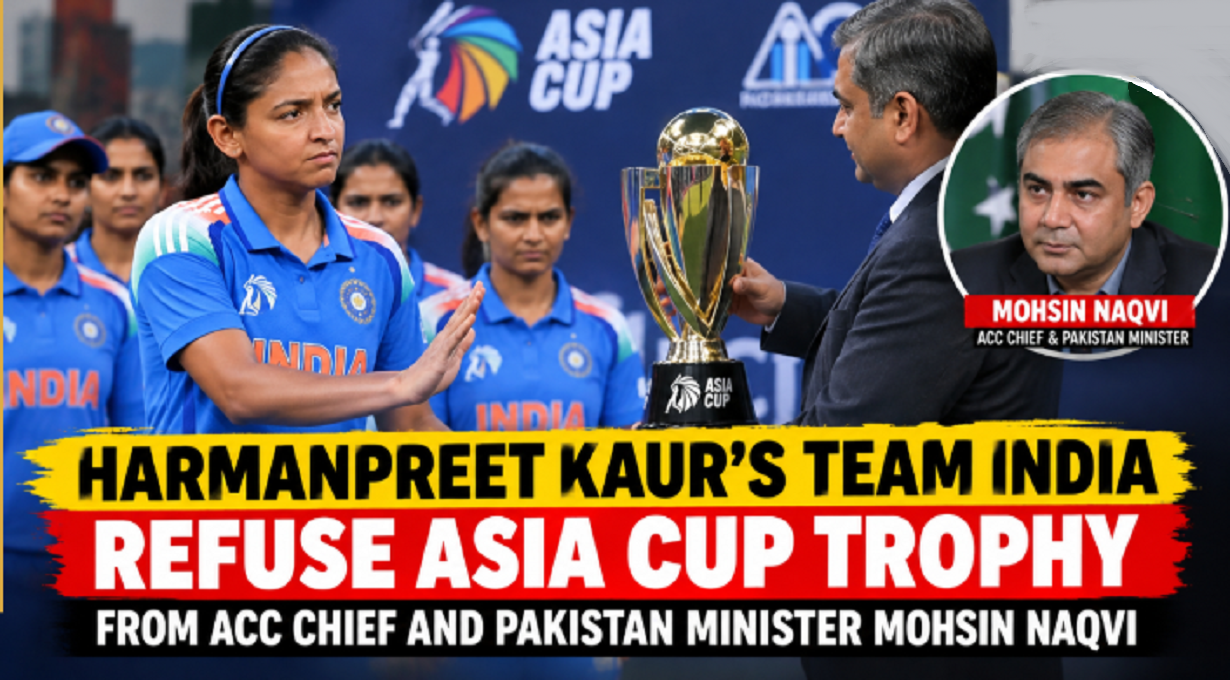
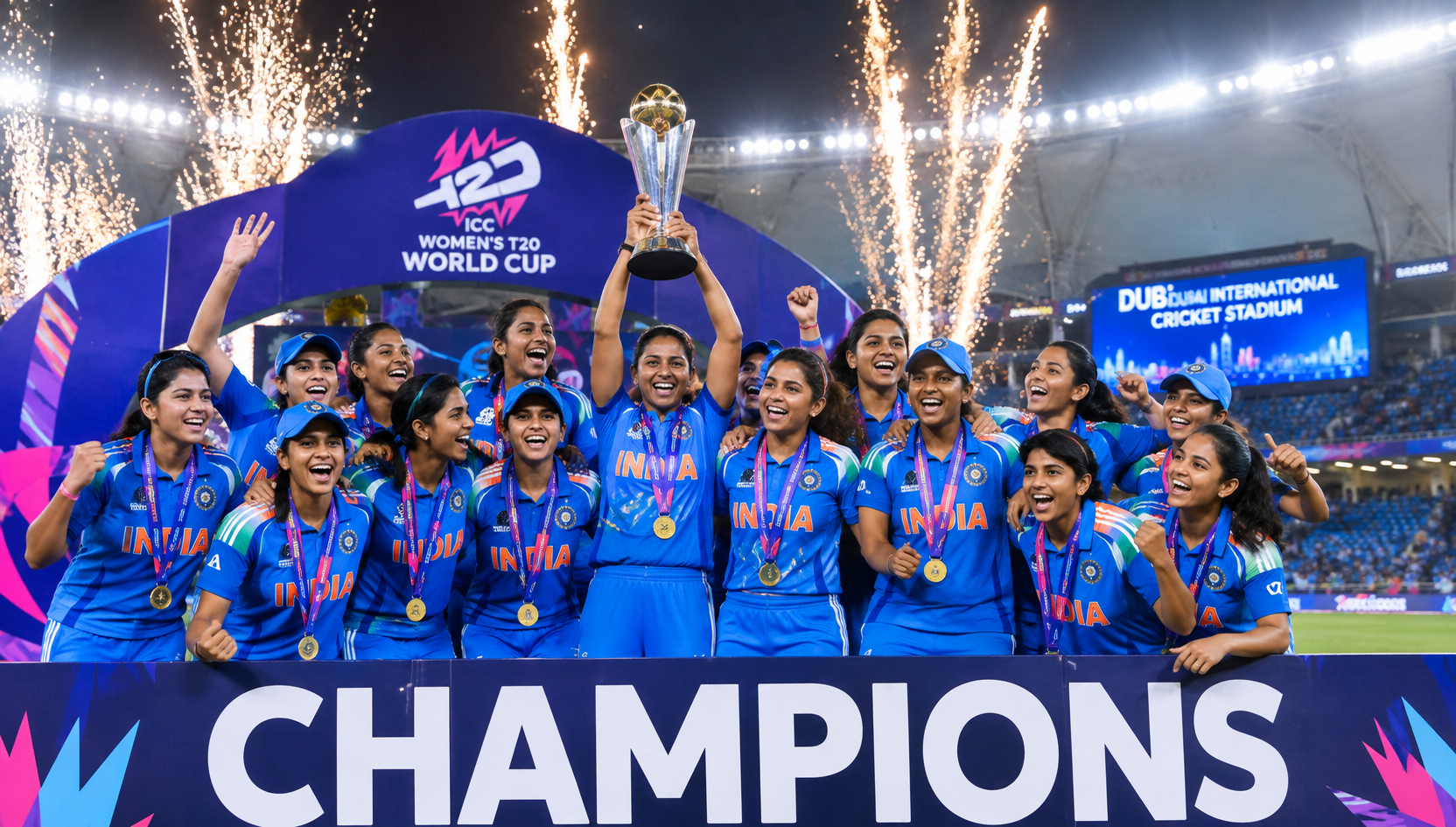
The Dubai International Cricket Stadium witnessed history repeat itself on a tense Sunday night. After thrashing Sri Lanka by 72 runs to claim a record-extending eighth continental crown, the Indian women’s cricket team chose not to collect the Women’s Asia Cup trophy controversy focal point from Asian Cricket Council (ACC) president Mohsin Naqvi.
Mirroring the exact precedent set by the men’s team nearly a year prior at the very same venue, Harmanpreet Kaur and her squad celebrated their triumph on their own terms. While Shafali Verma and Smriti Mandhana delivered masterclasses with the bat and N. Shree Charani wrecked the opposition lineup with four wickets, the glittering silverware remained off the podium.
This comprehensive analysis explores the administrative breakdown, the geopolitical friction shaping modern sports administration, and the complete timeline of events that turned a glorious victory into a diplomatic talking point.
The 2026 Final Breakdown: Cricket Brilliance Overshadowed
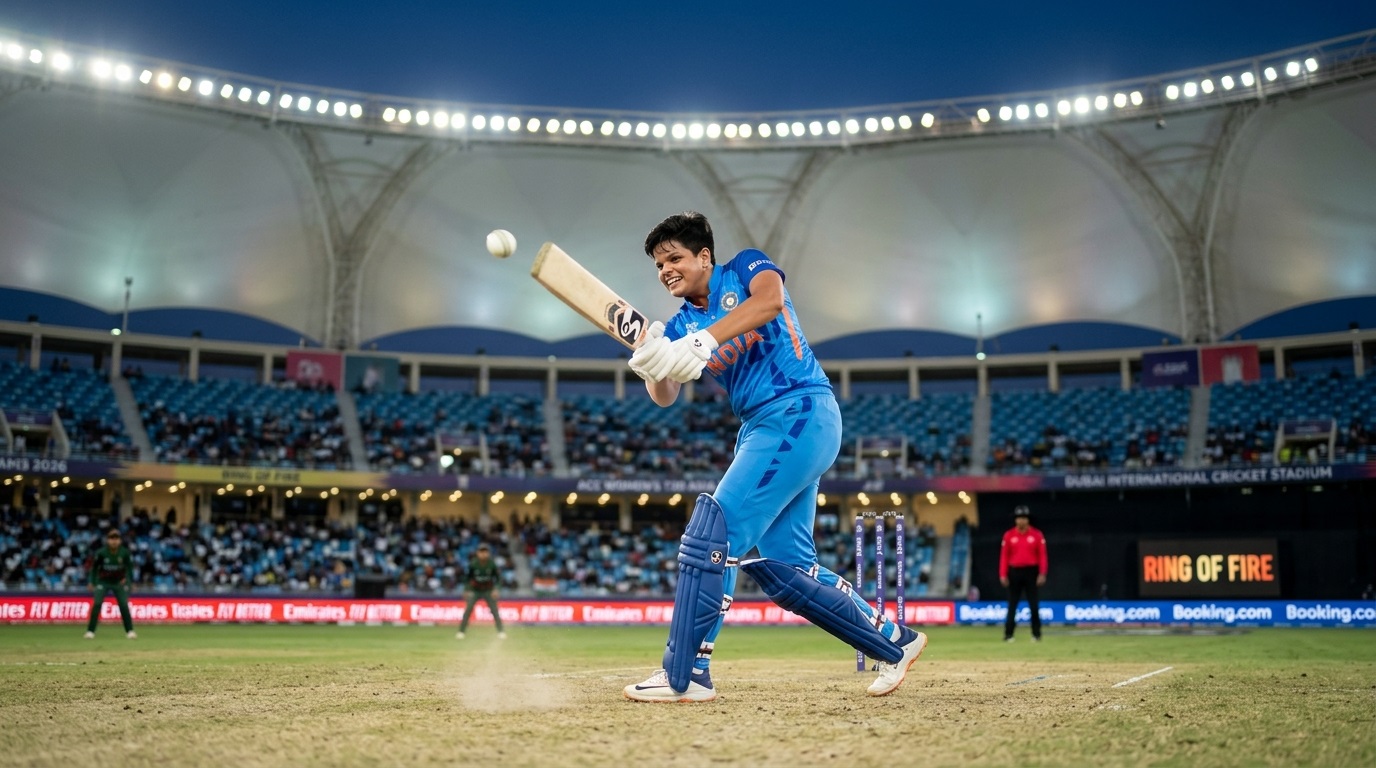
Before the ceremonial impasse gripped the stadium, the Women’s Asia Cup trophy controversy was preceded by a masterclass in T20 batting and bowling. Asked to bat first, India put up a formidable total of 183/5 in their allotted 20 overs.
Openers Shafali Verma and vice-captain Smriti Mandhana orchestrated a phenomenal 129-run partnership—the highest for any wicket in a Women’s T20 Asia Cup final. Shafali blitzed her way to a fifty in just 24 balls, setting the tone for total dominance.
Match Performance Highlights
- Shafali Verma: 68 runs off 39 deliveries, featuring aggressive strokeplay and the fastest fifty of the tournament.
- Smriti Mandhana: 59 runs off 39 deliveries, anchoring the innings with technical elegance.
- N. Shree Charani: Returned stellar bowling figures of 4/20, dismantling the Sri Lankan middle and lower order.
- Deepti Sharma: Chipped in with 3 crucial wickets, neutralizing Sri Lanka’s chase early.
Sri Lanka’s chase never gained momentum against the disciplined Indian attack, eventually folding for 111 all out. Yet, the moment the final wicket fell, attention pivoted instantly from the scorecard to the VVIP enclosure.
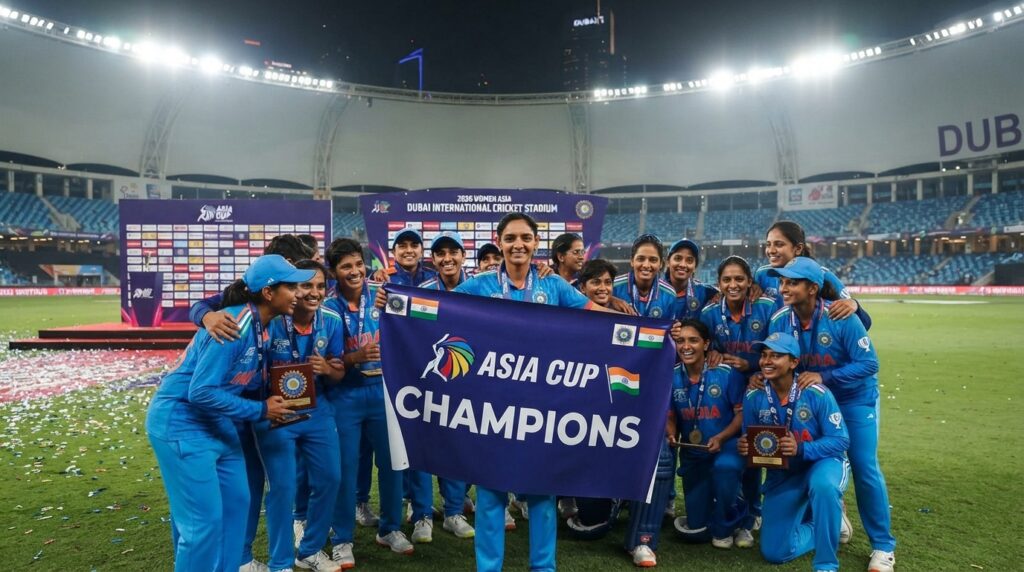
Anatomy of the Standoff: Inside the Dubai Presentation Impasse
As the post-match ceremony commenced, the divide between the Board of Control for Cricket in India (BCCI) and the Asian Cricket Council leadership became glaringly apparent. ACC president Mohsin Naqvi—who also serves as Pakistan’s Interior Minister and Chairman of the Pakistan Cricket Board (PCB)—stepped onto the dais to hand over the runners-up cheque to Sri Lankan captain Chamari Athapaththu.
However, the champions were conspicuously absent. The team remained inside the dressing room while BCCI secretary Devajit Saikia and vice-president Rajiv Shukla met the players pitch-side to hand out internal recognition, including in-house fielding medals.
[Match Ends: India wins by 72 runs]
       │
       ├─► Sri Lanka collects runners-up awards from Mohsin Naqvi
       │
       ├─► Indian squad remains in dressing room / conducts internal ceremony
       │
       └─► Impasse on Presentation Dais (Mediation Fails) ──► Silverware Returned to ACC Office
The Breakdown in Mediation
Reports confirmed that the Women’s Asia Cup trophy controversy was entirely predictable, as the BCCI had communicated its stance to tournament organizers prior to the fixture. According to senior board officials:
- The Primary Objection: The Indian board maintained that accepting silverware from a senior political figure heading a rival cricket board was untenable, upholding the policy established during the 2025 men’s tournament.
- Proposed Alternatives: The BCCI offered pragmatic compromises to ensure a smooth ceremony. Officials requested that the ACC Deputy Chair, Khalid Al Zarooni, present the trophy. Alternatively, they proposed the modern norm where a representative of the winning board hands over the prize.
- The Deadlock: With neither side willing to back down, Naqvi remained on the dais while the Indian team refused to step forward. Ultimately, the ceremony wrapped up without the champions receiving the physical trophy, which was subsequently returned to ACC headquarters in Dubai.
Pro-Tip for Sports Analysts: Administrative boycotts in multi-nation tournaments highlight the fragile bridge between regional sports bodies and geopolitical realities, demonstrating how off-field policy directly dictates on-field protocol.
Comparative Analysis: 2025 Men’s Final vs. 2026 Women’s Final
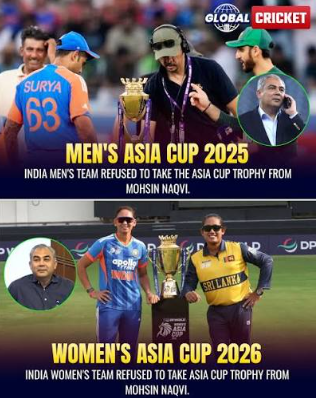
To fully grasp the magnitude of the Women’s Asia Cup trophy controversy, one must examine how consistency has defined the BCCI’s administrative posture across both senior national squads.
| Metric / Detail | 2025 Men’s Asia Cup Final | 2026 Women’s Asia Cup Final |
| Opponent Defeated | Pakistan | Sri Lanka |
| Tournament Venue | Dubai International Stadium | Dubai International Stadium |
| Core Issue | Refusal to accept trophy from Mohsin Naqvi | Refusal to accept trophy from Mohsin Naqvi |
| Team Action | Attended stage but refused awards; mimicked lifting invisible trophy | Remained in dressing room; conducted internal fielding medal presentation |
| Resolution Status | Trophy remained uncollected at ACC headquarters | Silverware retained by organizers pending diplomatic resolution |
This side-by-side comparison illustrates a calculated, institutional stance rather than an impulsive emotional reaction by individual players. Head coach Amol Muzumdar reinforced this in the post-match press conference, stating plainly that the team stood firmly behind the board’s directive and viewed their status as champions as the ultimate, unalterable truth of the tournament.
The Broader Implications for Asian Cricket Governance
The repeated occurrence of trophy boycotts under the ACC banner signals a deep structural crisis within regional sports administration. When political appointees hold dual executive roles across government ministries and continental sports councils, the risk of diplomatic friction scaling onto the podium multiplies exponentially.
- Erosion of Neutrality: The ACC was founded to foster unified regional athletic development. When bilateral political tensions paralyze basic medal presentations, the neutral administrative fabric of the council is severely compromised.
- Precedent for Future Events: By successfully claiming continental titles without physical silverware—and celebrating with internal banners and peer-to-peer recognition—the Indian teams have established a functional workaround to administrative stalemates.
- The Future of ACC Leadership: Calls from major stakeholder boards to re-evaluate the criteria for neutral executive appointments are growing louder behind closed doors.
Frequently Asked Questions
Why did the Indian women’s team refuse the Asia Cup trophy?
The Indian team acted under direct instructions from the BCCI, refusing to accept the trophy from ACC president Mohsin Naqvi due to his dual role as a senior political leader in Pakistan, mirroring the exact stance taken by the men’s team in September 2025.
What alternatives did the BCCI propose during the ceremony?
The BCCI proposed that ACC Deputy Chair Khalid Al Zarooni hand over the trophy, or alternatively, that a representative from the winning Indian board present the silverware according to recent global sporting norms. Both proposals were declined.
Who won the 2026 Women’s Asia Cup final?
India defeated Sri Lanka by 72 runs in the final at the Dubai International Cricket Stadium, securing a record-extending eighth continental title behind brilliant performances from Shafali Verma, Smriti Mandhana, and N. Shree Charani.
Where is the 2026 Women’s Asia Cup trophy now?
Following the stalemate on the presentation dais, the official presentation ceremony concluded without the trophy being handed over. The silverware was subsequently removed by organizers and returned to ACC headquarters.
How did the Indian players celebrate their victory?
Instead of participating in the official podium ceremony with the ACC president, the Indian squad celebrated inside the dressing room and pitch-side, where BCCI officials presented them with in-house fielding medals and team recognition banners.
The events in Dubai have once again proven that modern cricket is inextricably linked with governance, policy, and national stance. While the lack of physical silverware on the podium marks an unconventional chapter in sports history, it fails to overshadow the sheer athletic dominance displayed by Harmanpreet Kaur’s squad throughout the campaign. By standing unified with their board’s directives, the team cemented their legacy as unquestioned champions of Asia.
To stay ahead of evolving developments in international cricket administration and tournament analysis, subscribe to our newsletter or explore our in-related coverage on sports governance today.
Read more sports news and latest updates
Read more cricket news and latest updates





Leave a Reply