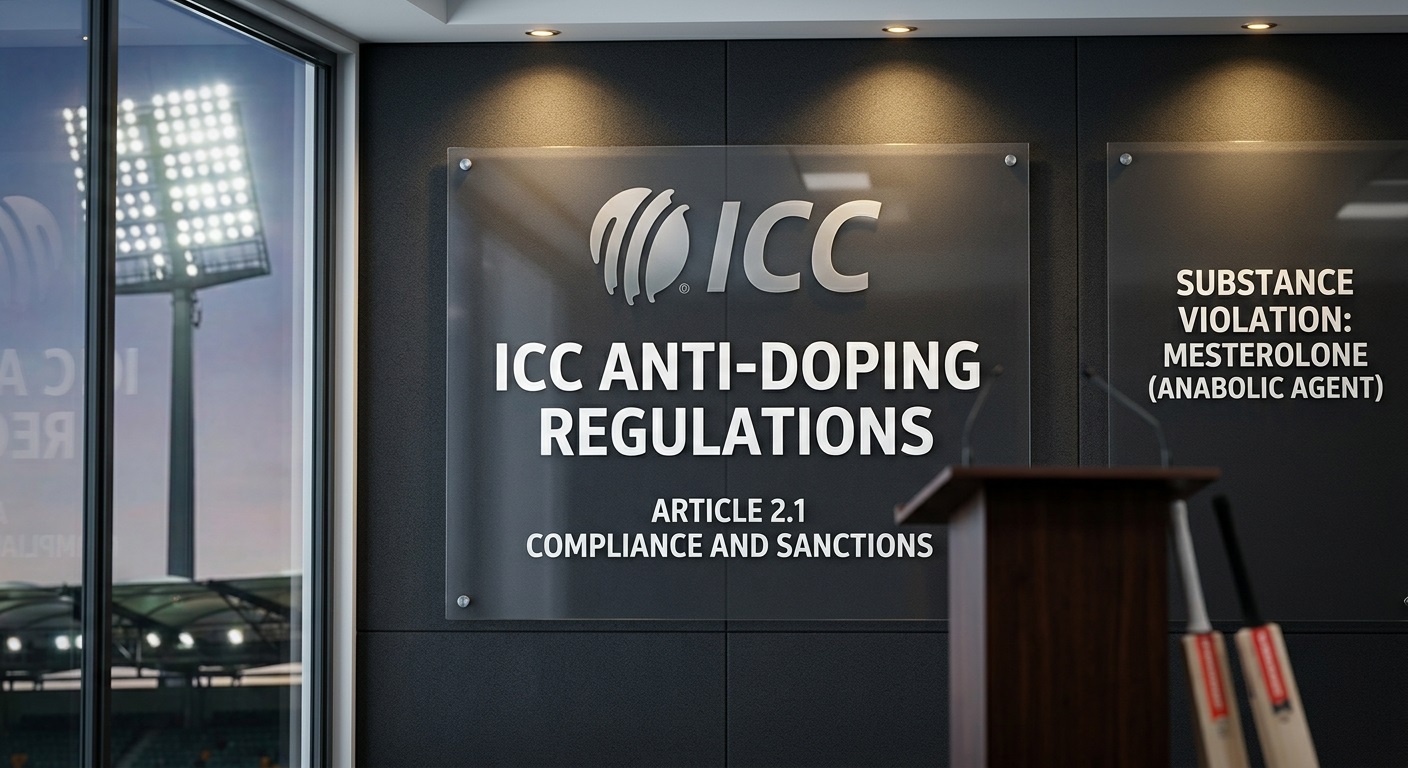
Asif Khan anti-doping ban: International cricket face strict anti-doping protocols designed to protect fair play across all member nations. The International Cricket Council (ICC) and the World Anti-Doping Agency (WADA) enforce rigorous testing schedules to keep the sport clean. When elite players fail to comply, disciplinary measures follow quickly to preserve competitive integrity.
The United Arab Emirates (UAE) senior national team suffered a major setback following an official investigation. Veteran top-order batter Asif Khan accepted a 15-month period of ineligibility under a Case Resolution Agreement after failing an out-of-competition drug screening. This comprehensive report breaks down the chemical testing details, the governing legal framework, the full timeline of sanctions, and what this development means for UAE international cricket.
Understanding the Anti-Doping Violation: Mesterolone Explained
The core of the disciplinary procedure stems from an out-of-competition sample collected on September 8, 2025. Laboratory analysis detected a prohibited metabolite of mesterolone, an oral anabolic androgenic steroid (AAS). Under the World Anti-Doping Agency Prohibited List, anabolic agents are banned at all times—both in-competition and out-of-competition—because they synthetic boost muscle recovery, strength output, and endurance capabilities.
Testing positive for an anabolic steroid triggers an immediate investigation under Article 2.1 of the ICC Anti-Doping Code, which governs the presence of a prohibited substance or its metabolites in an athlete’s sample. Article 2.1 establishes strict liability: athletes remain personally responsible for any substance found within their bodies, regardless of whether ingestion occurred intentionally or inadvertently through contaminated supplements.
Crucial Anti-Doping Rule: Strict liability under Article 2.1 means that an athlete does not need to show intentional cheat intent to incur a violation. The simple presence of a banned metabolite in the sample is sufficient to establish an anti-doping rule breach.
The Legal Resolution: WADA Case Resolution Agreement
Rather than contesting the findings before an independent Anti-Doping Tribunal, Asif Khan chose to resolve the matter through an official Case Resolution Agreement. Governed by WADA guidelines and ICC operational directives, this legal mechanism allows an athlete to acknowledge the infraction early, waive full hearing proceedings, and agree to a mutually negotiated period of ineligibility.
By admitting to the violation of Article 2.1 promptly, the 36-year-old batter avoided a potential maximum sanction of up to four years, which applies when intentional doping cannot be disproven. The resulting 15-month suspension reflects an agreed-upon compromise based on the degree of fault, full cooperation during proceedings, and the early admission of responsibility.
+-------------------------------------------------------------------------------+
|                       ICC ANTI-DOPING DISCIPLINARY PROCESS                   |
+-------------------------------------------------------------------------------+
|  1. Sample Collection  -->  2. Lab Analysis      -->  3. Notice of Charge     |
|     (Out-of-competition)    (Mesterolone found)       (Article 2.1 breach)    |
+-------------------------------------------------------------------------------+
|                                      |                                        |
|                                      v                                        |
+-------------------------------------------------------------------------------+
|  4. Case Resolution   -->   5. Sanction Execution -->  6. Results Annulment   |
|     (WADA & ICC Agreement)  (15-Month Suspension)     (Sept 8 - Dec 29, 2025)  |
+-------------------------------------------------------------------------------+
Comprehensive Sanction Timeline and Results Disqualification
The operational mechanics of the Asif Khan anti-doping ban involve explicit dates regarding backdating, training permission, and competitive eligibility. Because Asif Khan offered early admission and cooperated fully, governing authorities backdated the start of his 15-month suspension to the sample collection date of September 8, 2025.
| Phase / Milestone | Effective Date | Status & Permissions |
| Sample Collection | September 8, 2025 | Out-of-competition test conducted by ICC anti-doping officials. |
| Provisional Suspension | December 29, 2025 | Athlete formally barred from active participation pending resolution. |
| Suspension Inception Date | September 8, 2025 | Formal start of backdated 15-month sanction period. |
| Training Return Allowed | October 8, 2026 | Permitted to resume official squad training using ICC member facilities. |
| Suspension Expiration | December 7, 2026 | Official conclusion of the 15-month ineligibility term. |
| Match Re-Eligibility | December 8, 2026 | Fully clear to return to official international and domestic matches. |
Annulment of Individual Records and Financial Forfeiture
Under Article 10.10 of the ICC Anti-Doping Code, a player subject to anti-doping sanctions forfeits individual stats achieved between the test date and the start of a provisional suspension.
Annulment of Individual Records and Financial Forfeiture
Under Article 10.10 of the ICC Anti-Doping Code, a player subject to anti-doping sanctions forfeits individual stats achieved between the test date and the start of a provisional suspension.
- Disqualification Period: All individual performances recorded from September 8, 2025, to December 29, 2025, are erased from official match records.
- Financial & Prize Forfeiture: Asif Khan forfeits all prize money, individual appearance fees, performance bonuses, and medals accumulated during this window.
- Team Results Status: Team results for the UAE national squad remain unaffected unless multiple squad members return positive tests during the same tournament cycle.
Career Overview: Asif Khan’s Journey in International Cricket
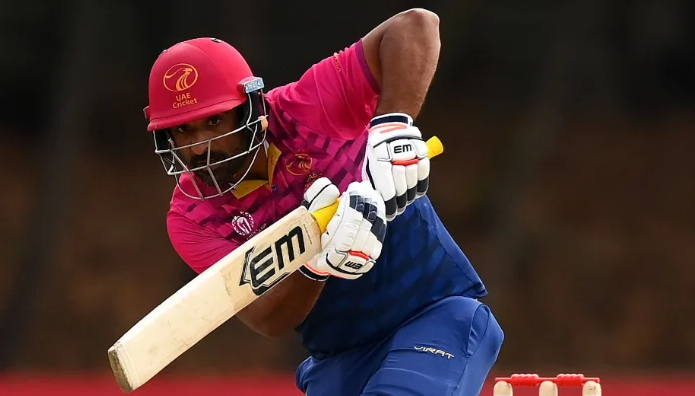
Asif Khan has established himself as one of the most reliable top-order run-scorers in Associate cricket. Born in Lahore, Pakistan, he played 32 first-class matches within Pakistan’s domestic setup before relocating to the UAE in 2017 to pursue new opportunities. After satisfying international residency requirements, he made his official international debut for the UAE national side in 2022.
Key Performance Statistics
Across both white-ball formats, Asif Khan provided vital explosive hitting and stability in the middle order:
- One-Day Internationals (ODIs): 38 matches, highlighted by rapid scoring rates and crucial century contributions in ICC Cricket World Cup Qualifier campaigns.
- Twenty20 Internationals (T20Is): 56 matches, serving as an attacking option during powerplays and middle overs.
- Domestic First-Class (Pakistan): 32 matches, building the foundational red-ball technique prior to shifting to Associate international cricket.
His most notable career highlight occurred in March 2023, when he smashed a 41-ball century against Nepal in Kathmandu—the fastest ODI century ever recorded by a player from an Associate nation and the fourth-fastest in ODI history overall. Losing a player of his caliber leaves an immediate operational void in the UAE batting structure.
Strategic Impact on UAE National Cricket Team
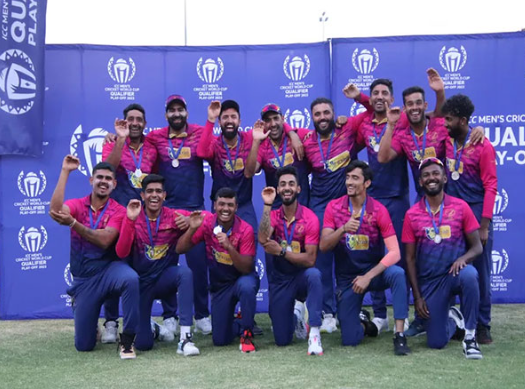
The loss of Asif Khan until December 2026 forces Emirates Cricket Board selectors to restructure their top-order batting unit across multiple ICC tournament cycles.
Key Operational Challenges for UAE Cricket
- Middle-Order Experience Deficit: Replacing a veteran player with nearly 100 international caps across formats requires accelerating the development of younger squad members.
- Tactical Power-Hitting Loss: Asif Khan provided rare high-strike-rate capability against both seam and spin in middle-overs play.
- Strict Compliance Oversight: The Emirates Cricket Board will likely expand internal education programs surrounding dietary supplements, over-the-counter medications, and third-party nutritional products to prevent inadvertent rule breaches.
Frequently Asked Questions
Why did Asif Khan receive a 15-month ban from cricket?
Asif Khan accepted a 15-month ban after testing positive for a metabolite of mesterolone, an anabolic steroid banned by WADA. The substance was detected in an out-of-competition sample collected on September 8, 2025, constituting a breach of Article 2.1 of the ICC Anti-Doping Code.
What chemical substance was involved in Asif Khan’s doping test?
The test detected a metabolite of mesterolone, which belongs to the anabolic androgenic steroid class. Mesterolone is prohibited at all times under the WADA Prohibited List because it artificially elevates testosterone levels, promotes muscle tissue recovery, and enhances athletic physical performance capabilities.
When can Asif Khan return to play international cricket?
Asif Khan is eligible to return to competitive international cricket on December 8, 2026. Because his sanction was backdated to September 8, 2025, his 15-month ban concludes on December 7, 2026. He is allowed to return to team training facilities earlier, starting October 8, 2026.
What happens to Asif Khan’s match statistics during the testing period?
All individual statistics, medals, points, and prize money earned by Asif Khan between September 8, 2025, and December 29, 2025 (the start of his provisional suspension) have been formally disqualified under Article 10.10 of the ICC Anti-Doping Code.
Can Asif Khan appeal the 15-month suspension?
No. Because the sanction was finalized through a Case Resolution Agreement signed jointly by Asif Khan, the ICC, and the World Anti-Doping Agency (WADA), the player explicitly waived his right to appeal the decision before the Court of Arbitration for Sport (CAS) or an independent tribunal.
Navigating Anti-Doping Compliance in Modern Cricket
The Asif Khan anti-doping ban highlights the strict legal framework governing professional international sports. Strict liability rules under Article 2.1 demand that athletes maintain complete oversight over every substance they ingest. While an early admission via a WADA Case Resolution Agreement prevented a maximum four-year ban, the resulting 15-month suspension removes an experienced batter from international competition until late 2026.
For sports organizations and professional players, this ruling reinforces three fundamental requirements:
- Mandatory Educational Audits: Continual verification of all therapeutic substances, protein powders, and dietary supplements against current WADA prohibited listings.
- Proactive Batch Testing: Utilizing accredited third-party testing services to confirm that nutritional products are entirely free from unlisted anabolic steroids or anabolic precursors.
- Strict Legal Compliance: Understanding that inadvertent ingestion does not eliminate liability under strict anti-doping rules, making personal due diligence essential for career survival.
To stay up to date on international sports governance, ICC disciplinary decisions, and cricket news developments, bookmark our sports analysis hub and subscribe to our newsletter today.
Read more sports news and latest updates
Read more cricket news and latest updates