



Arsenal defense vs Chelsea attack: The Premier League stage brings a fascinating clash of styles as Mikel Arteta’s defensive unit faces an explosive test against Chelsea’s fast-charging attack. Arsenal enter this derby with an immaculate record at the back, having surrendered just one attempt on target across their opening fixtures. However, Chelsea’s recent tactical shift toward vertical directness presents a fundamentally different challenge than standard low-block opponents.
Understanding how the Arsenal defense vs Chelsea attack dynamic unfolds requires looking beyond basic possession numbers. While Arsenal aim to strangle games through territorial dominance and suffocating rest defense, Chelsea thrive on rapid transitions, using minimal touches to turn defensive turnovers into immediate goalscoring chances.

Key Takeaways
- Arsenal defense vs Chelsea attack forms the core tactical battleground of this Premier League encounter.
- Arsenal’s defensive structure leads the league in xGA (expected goals against) and central compactness.
- Chelsea rely on rapid vertical wing transitions rather than sustained possession to break low blocks.
- The battle between Declan Rice and Chelsea’s attacking midfielders will dictate box-to-box tempo.
1. Arsenal’s Rest-Defense Mechanics vs. Chelsea’s Vertical Pace
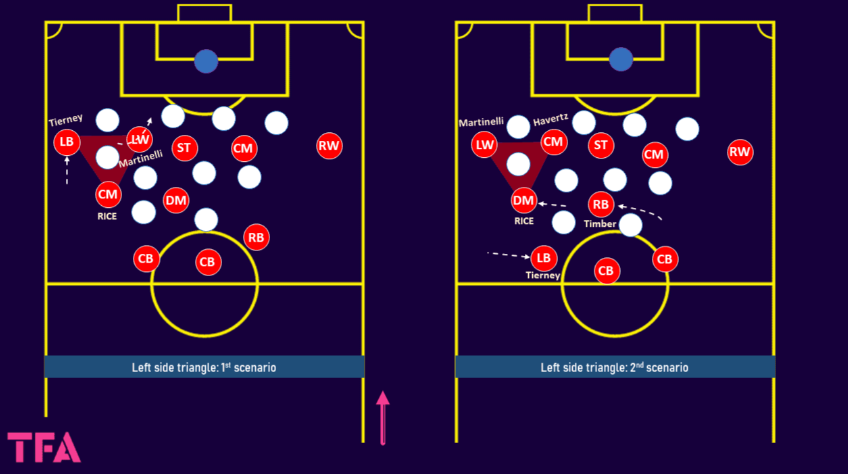
Arsenal’s defensive record under Mikel Arteta is built on a sophisticated rest-defense mechanism. When Arsenal attack, their full-backs invert or tuck into central channels alongside the defensive midfielder. This structure forms a solid five-man wall behind the ball that snuffs out opposition counters before they start.
Arsenal Attack Phase (3-2-5 Rest Defense):
[CB: Saliba]    [CB: Gabriel]    [RB/LB: Inverted]
        [DM: Rice]       [CM: Partey/Merino]
--------------------------------------------------
[LW]     [AM]     [ST]     [AM]     [RW]
Chelsea’s primary weapon directly targets the space behind high full-backs. Rather than slow build-up play, Chelsea quickly feed early passes into wide channels to exploit half-spaces. If Arsenal’s counter-press falters by even a fraction of a second, Chelsea’s wide runners can attack isolated central defenders in open pitch transitions.
Pro Tip: In high-stakes derbies, rest-defense discipline matters more than raw tackle statistics. Defensive midfielders must prioritize positional positioning over diving into tackles to stop fast counter-attacks.
2. Statistical Comparison: Defensive Resilience vs. Attacking Output
To evaluate the balance between both squads, comparing early-season performance metrics highlights contrasting tactical profiles across key areas:
| Performance Metric | Arsenal (Defensive Focus) | Chelsea (Attacking Focus) | Tactical Impact |
| Goals Conceded per Match | 0.00 | 2.50 | Arsenal prioritize defensive structure; Chelsea accept risk for goal output. |
| Shots Allowed per 90 | 4.5 | 13.2 | Arsenal restrict box entries; Chelsea rely on high-volume exchanges. |
| Expected Goals Against (xGA) | 0.38 | 1.85 | Arsenal hold a tighter defensive floor. |
| Average Ball Possession | 62.4% | 38.1% | Arsenal control tempo; Chelsea play on vertical turnovers. |
| Shot Conversion Rate | 12.5% | 22.8% | Chelsea maximize transitional opportunities with clinical finishing. |
3. Key Individual Matchups Across the Pitch
William Saliba & Gabriel vs. Chelsea’s Central Strikers
Arsenal’s center-back tandem excels at aerial duels, physical grappling, and box defense. They rarely get pulled out of position. Chelsea’s central attackers must drag these defenders into wide channels to open central lanes for late runners coming from midfield.
Declan Rice vs. Chelsea’s Primary Playmaker
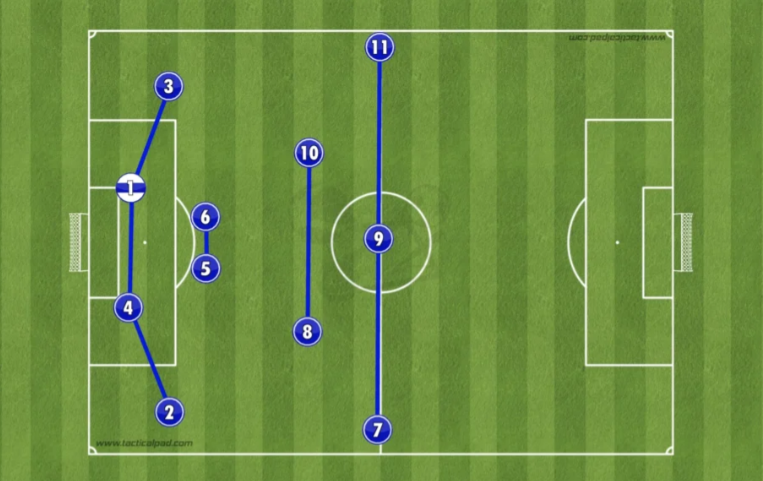
Declan Rice’s role as Arsenal’s central shield is vital for stopping the Arsenal defense vs Chelsea attack threat. Rice covers ground laterally, denying playmakers time on the ball to turn and pick out decisive forward passes.
Arsenal’s Full-Backs vs. Chelsea’s Direct Wingers
Whether Arteta fields natural full-backs or converted center-backs on the flanks, stopping 1v1 dribbles along the touchline will dictate how often Chelsea can cross into the penalty area.
4. Set-Piece Dominance as a Strategic Weapon
Set-piece execution could unlock this tactical stalemate. Arsenal have transformed set pieces into a major source of goals through specialized corner routines, far-post delivery routines, and blocking schemes inside the six-yard box.
- Arsenal Set-Piece Scheme: Overloading the keeper’s zone with tall targets while blocking trailing defenders.
- Chelsea Defensive Weakness: Vulnerability to second-phase balls after clearing initial crosses.
If Chelsea concede corners under pressure, Arsenal’s height advantage could swing the match balance without needing open-play dominance.

5. Tactical Blueprint for Both Managers
Mikel Arteta’s Path to Victory
- Sustain High Territory: Keep Chelsea pinned in their own defensive third to prevent quick vertical counter-attacks.
- Force Play Out Wide: Direct Chelsea’s build-up away from central lanes into crowded touchlines.
- Exploit Set Pieces: Capitalize on aerial mismatches inside the box on corner routines.
Chelsea’s Path to Victory
- Bypass the Midfield Press: Use direct long balls over Arsenal’s first pressing line to launch wide counters.
- Target Half-Spaces: Occupy channels between Arsenal’s full-backs and center-backs during fast breaks.
- Maintain Transition Intensity: Attack with speed immediately after regaining possession before Arsenal can set their defensive block.
Frequently Asked Questions
What makes the Arsenal defense vs Chelsea attack match up so tactical?
It pits Arsenal’s low-xGA, possession-controlling defensive block against Chelsea’s vertical counter-attacking engine. Arsenal aim to control space through high territory and rest defense, while Chelsea look to explode into open space through fast transitions.
How has Arsenal maintained clean sheets in the Premier League?
Arsenal restrict opposition chances by holding high ball possession, enforcing disciplined rest defense, and relying on the central partnership of William Saliba and Gabriel Magalhães, backed up by David Raya in goal.
How does Chelsea’s attacking style differ under their current setup?
Chelsea favor direct, rapid transitions over slow possession play. They absorb pressure in a mid-block before using wide wingers to drive into forward spaces on turnovers.
Why are set pieces crucial in the Arsenal vs Chelsea matchup?
Arsenal are among the most effective teams on set pieces in Europe, using clever routines to generate quality scoring chances. Chelsea’s ability to defend aerial crosses inside the six-yard box will be critical to keeping the game close.
Who holds the recent head-to-head advantage between Arsenal and Chelsea?
Arsenal hold an impressive head-to-head record over Chelsea in recent seasons, remaining unbeaten across their last 11 meetings in all competitions through strong tactical execution and control.
Conclusion
The confrontation between Arsenal defense vs Chelsea attack offers a classic tactical contrast between defensive control and transitional threat. Arsenal’s structural discipline and elite set-piece performance make them tough to beat, but Chelsea’s rapid wide attacks mean any defensive lapse could prove decisive.
Who do you think breaks the deadlock in this London derby? Share your match predictions and tactical line-up choices in the comments below!
Read more football news and latest updates











Leave a Reply