Naomi Osaka Stuns Sabalenka at Wimbledon 2026
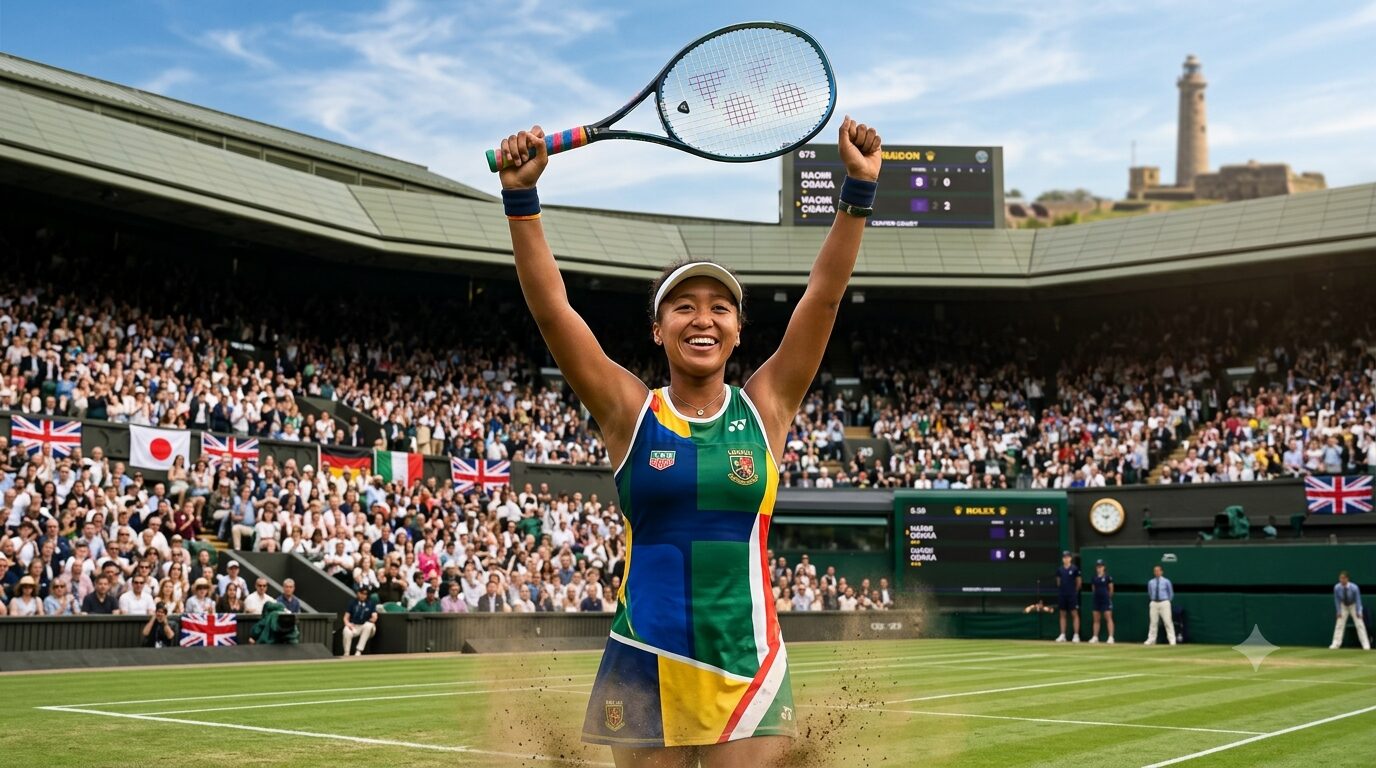
The All England Lawn Tennis Club witnessed one of its most electrifying days of modern tennis during the 2026 Wimbledon Championships. In a stunning performance on Center Court, former world number one Naomi Osaka delivered a tactical masterclass, defeating the current world number one Aryna Sabalenka in straight sets. The 6-2, 7-6(7/2) victory marks a monumental milestone in Osaka’s career, propelling her into the Wimbledon quarter-finals for the very first time.
This dramatic clash was far more than just another fourth-round fixture. It was a statement of resurgence, a sweet moment of revenge, and a showcase of high-stakes grass-court adaptation. Meanwhile, on the side courts and across the men’s singles draw, records were shattered, and seeds fell, turning this particular Sunday into an unforgettable chapter of tennis history. This comprehensive breakdown explores how Osaka dismantled the top seed, the strategic changes fueling her resurgence, and the historic milestones achieved by standard-bearers like Novak Djokovic.
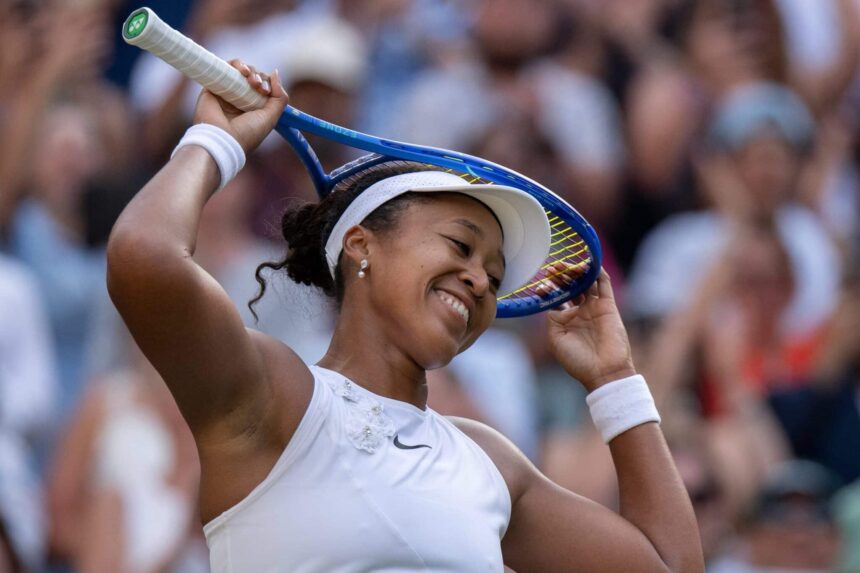
The Masterclass: How Naomi Osaka Dismantled Aryna Sabalenka
Entering the match, Aryna Sabalenka was widely regarded as the heavy favorite. The powerhouse from Belarus possessed the exact brand of high-velocity tennis that typically dominates fast grass courts. Furthermore, Sabalenka held psychological leverage over Osaka, having eliminated her in straight sets just a month prior during the French Open round of 16 on clay.
However, from the opening point on Center Court, it was clear that Osaka had spent the intervening weeks studying her opponent and refining her approach.
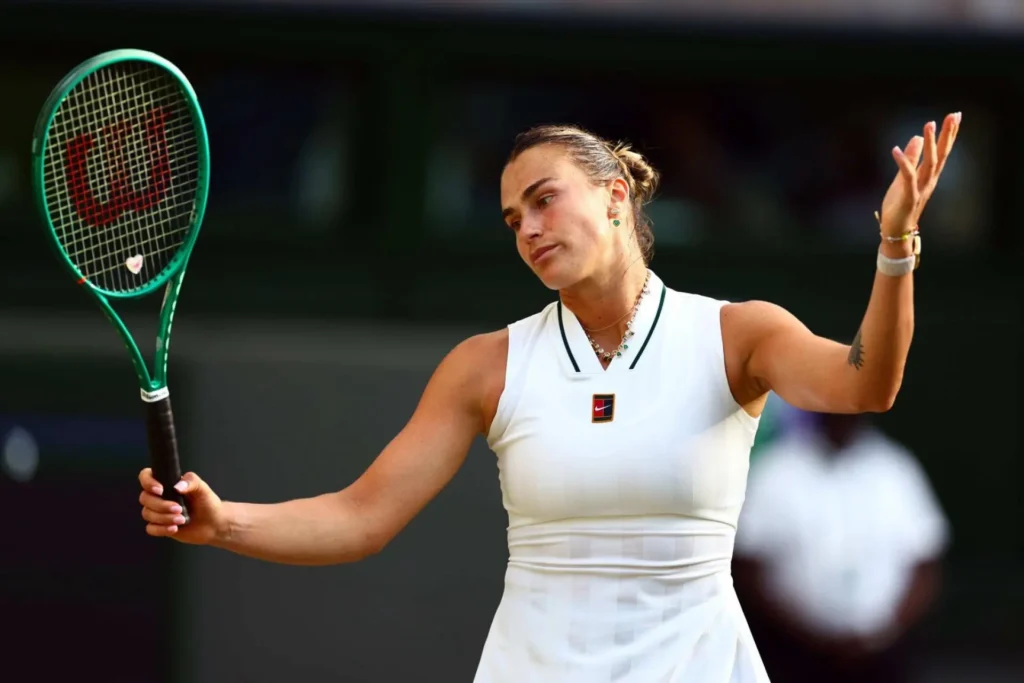
Set 1: Flawless Execution and Rapid Aggression
Osaka opened the first set with absolute clarity. Rather than trying to match Sabalenka’s brute force with equal velocity, she focused heavily on precision, depth, and early ball-striking. By taking the ball on the rise, Osaka effectively robbed Sabalenka of the time needed to set up her devastating baseline groundstrokes.
Osaka’s first-serve percentage was exceptional, frequently finding the corners and forcing weak returns. She broke Sabalenka’s formidable serve twice in the opening set, wrapping it up at a blistering 6-2 in just over thirty minutes. The Center Court crowd looked on in awe as the 14th seed turned the world’s top-ranked player into a defensive runner.
Set 2: The Mental Battle and the Tiebreak Clinic
As expected of a four-time Grand Slam champion, Sabalenka fought back fiercely in the second set. She stabilized her service games, decreased her unforced errors, and began finding her range with cross-court forehands. The two heavy hitters locked horns in a grueling baseline war, holding serve all the way to a high-tension tiebreak.
It was in this tiebreak that Osaka’s mental fortitude shone brightest. Under the ultimate pressure, she stayed disciplined, utilizing low, skidding slices to keep the ball out of Sabalenka’s strike zone. Sabalenka’s frustration grew, leading to critical unforced errors. Osaka stormed through the tiebreak, closing it out 7-2 to secure the victory and a place in her maiden Wimbledon quarter-final.
The Tomasz Wiktorowski Effect: Re-Engineering a Champion
Osaka’s flawless performance at Wimbledon 2026 is no accident. It is the byproduct of a calculated tactical overhaul guided by her high-profile coach, Tomasz Wiktorowski.
Wiktorowski is widely respected in the tennis community for his instrumental role in guiding Iga Swiatek to the top of the sport. Since joining forces with Osaka, the veteran strategist has steadily reshaped the 28-year-old’s movement patterns and tactical awareness on surfaces outside her native hard courts.
+-------------------------------------------------------------+
|               TACTICAL ADJUSTMENTS UNDER WIKTOROWSKI        |
+-------------------------------------------------------------+
| 1. Footwork Efficiency: Short, explosive adjustment steps   |
|    to maintain balance on unstable, slippery grass lawns.   |
|                                                             |
| 2. Varied Spin Profiles: Incorporating heavy underslice to  |
|    disrupt the baseline rhythm of flat-hitting power players|
|                                                             |
| 3. De-Pressurizing Strategy: Shifting public focus toward   |
|    on-court fashion choices to alleviate competitive stress.|
+-------------------------------------------------------------+
Historically, Osaka struggled to translate her four Grand Slam titles (two Australian Opens and two US Opens) to grass. The slick surface requires low bending, exceptional balance, and instinctive forward movement—elements that did not naturally align with her deep baseline slide.
Wiktorowski focused heavily on her footwork, implementing short adjustment steps to counter the unpredictable low bounces of grass. The results speak volumes: Osaka reached the semi-finals of the US Open last year, built incredible momentum into 2026, and remarkably has not dropped a single set across her opening four matches at the All England Club this year.
Beyond tactics, Osaka noted that her headline-grabbing, haute couture tennis outfits have played a psychological role in her success. By shifting media attention toward her fashion and style, she felt shielded from the suffocating pressure of tournament expectations, allowing her to play free, instinctual tennis.
Djokovic Rewrites the History Books: Surpassing Federer
While the women’s draw provided shocking upsets, the men’s draw delivered historical immortality. Novak Djokovic continued his relentless pursuit of tennis records, achieving a historic milestone that separates him from almost every legend to ever play the game.
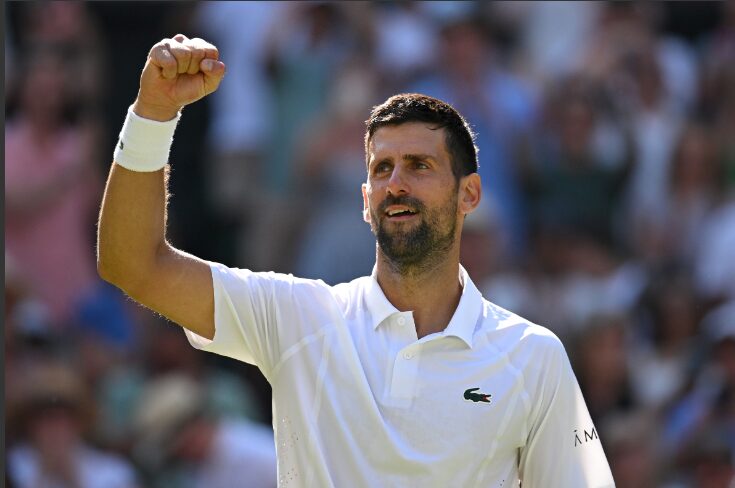
Breaking the Singles Match-Win Record
The 39-year-old Serbian icon squared off against Russian qualifier Roman Safiullin in a highly competitive fourth-round encounter. Safiullin pushed the legendary champion, showcasing incredible baseline power and claiming the third set. However, Djokovic’s legendary resilience and unmatched return game carried him to a 7-6(8/6), 6-3, 3-6, 6-3 victory.
This hard-fought win marked Djokovic’s 106th singles match victory at Wimbledon, officially breaking the long-standing men’s record of 105 wins previously held by Roger Federer.
| Metric / Record Holder | Total Wimbledon Match-Wins | Current Standing |
| Martina Navratilova | 120 | All-Time Absolute Leader |
| Novak Djokovic | 106 | All-Time Men’s Leader |
| Roger Federer | 105 | Retired (Second in Men’s) |
Djokovic’s victory also secured his 17th career Wimbledon quarter-final appearance and his ninth consecutive trip to the final eight in London. Following the match, a reflective Djokovic spoke openly about the mental exhaustion of staying dominant at 39 years of age.
“Survive to thrive, that’s how I feel. So hopefully the thriving part is coming. Our mind wanders all the time; it’s very hard to keep it in the present moment. Whoever does that consistently is a winner.”
— Novak Djokovic
Djokovic admitted that he purposely adjusted his game plan against Safiullin, opting to shorten rallies and mix up the pace to avoid grueling baseline exchanges. With this victory, the Serb moves three wins away from securing a record-breaking 25th Grand Slam singles title, which would break his tie with Margaret Court and match Federer’s iconic haul of eight Wimbledon gentlemen’s singles trophies.
Round-Up of Other Pivotal Wimbledon Fourth-Round Action
The drama on Sunday extended well beyond the headline acts. Both the men’s and women’s draws saw intense battles that set up intriguing quarter-final scenarios.
The Women’s Draw: Muchova Advances, Pegula Handles the Pressure
Czech 10th seed Karolina Muchova outlasted former Wimbledon champion Barbora Krejcikova in a high-quality, three-set baseline battle, winning 7-5, 5-7, 6-3. Muchova’s variety, net play, and slice variations proved just enough to destabilize Krejcikova, booking her a high-stakes quarter-final showdown against the red-hot Naomi Osaka.
Elsewhere, American veteran Jessica Pegula delivered an assertive performance to defeat her rising teenage compatriot, Iva Jovic. The young Jovic started incredibly strong, capturing the first set 6-4 with fearless hitting. However, Pegula relied on her deep experience and flat groundstrokes to weather the storm, executing a brilliant comeback to win 4-6, 6-3, 6-1.
The Men’s Draw: Thrills, Five-Setters, and Heartbreak
- Alexander Bublik vs. Frances Tiafoe: The enigmatic 10th seed Kazakh, Alexander Bublik, survived an absolute rollercoaster against 17th-seeded American Frances Tiafoe. In a match filled with trick shots, underarm serves, and booming winners, Bublik emerged victorious 4-6, 7-6(7/5), 7-6(9/11), 4-6, 6-3.
- Taylor Fritz vs. Lorenzo Sonego: American 6th seed Taylor Fritz overcame a fiery start from Italy’s Lorenzo Sonego. Sonego took the opening set with hyper-aggressive play, but Fritz dialed in his serve and baseline consistency to claim a 4-6, 6-3, 6-4, 7-6(7/5) win.
- Grigor Dimitrov vs. Matteo Berrettini: In a late Center Court blockbuster between two premier grass-court players, Bulgaria’s Grigor Dimitrov outlasted former finalist Matteo Berrettini in a physical five-set duel, winning 6-3, 6-4, 3-6, 5-7, 6-3.
Frequently Asked Questions
Has Naomi Osaka ever won Wimbledon before?
No, Naomi Osaka has never won Wimbledon. Historically, grass has been her most challenging surface. Her historic victory over Aryna Sabalenka in 2026 marks the first time in her illustrious career that she has reached the quarter-finals at the All England Lawn Tennis Club.
Who is Naomi Osaka’s current coach?
Naomi Osaka is currently coached by Tomasz Wiktorowski. Wiktorowski is highly famous for coaching world No. 1 Iga Swiatek. He is widely credited with helping Osaka dramatically improve her defensive movement and footwork patterns on grass courts.
What record did Novak Djokovic break at Wimbledon 2026?
With his fourth-round victory over Roman Safiullin, Novak Djokovic earned his 106th singles match victory at Wimbledon. This milestone broke Roger Federer’s previous men’s record of 105 match wins. He now trails only Martina Navratilova, who holds the absolute record with 120 singles match wins.
Who will Naomi Osaka play next in the quarter-finals?
Naomi Osaka will face the Czech Republic’s Karolina Muchova, the tournament’s 10th seed, in the quarter-finals. Muchova advanced by defeating former Wimbledon singles champion Barbora Krejcikova in three sets.
What is Naomi Osaka’s current seeding at Wimbledon 2026?
Naomi Osaka entered the 2026 Wimbledon Championships seeded 14th. Despite her lower seeding relative to her career achievements, she has dominated the field, advancing to the final eight without dropping a single set.
Conclusion
The fourth round of Wimbledon 2026 provided a definitive shifting of the guard and a celebration of enduring greatness. Naomi Osaka’s straight-sets demolition of world number one Aryna Sabalenka proves that her evolution into an elite, multi-surface threat is complete. Armed with tactical adjustments from Tomasz Wiktorowski and playing with unburdened freedom, Osaka is suddenly a premier favorite to lift the Venus Rosewater Dish.
Concurrently, Novak Djokovic’s historic eclipse of Roger Federer’s match-win record reminds the sporting world that the era of the “Big Three” still casts a long, golden shadow over grass-court history. As the tournament moves into the quarter-finals, tennis fans are guaranteed high-drama matchups where legends look to extend their legacies and revitalized champions look to capture new terrain.
What do you think of Naomi Osaka’s incredible transition to grass? Can Novak Djokovic go on to claim his 25th Grand Slam title this week? Share your thoughts and predictions in the comments section below, and subscribe to our newsletter for daily court-side updates and expert tactical breakdowns!
https://cx7sports.com/category/tennis
Read more tennis news and latest updates