


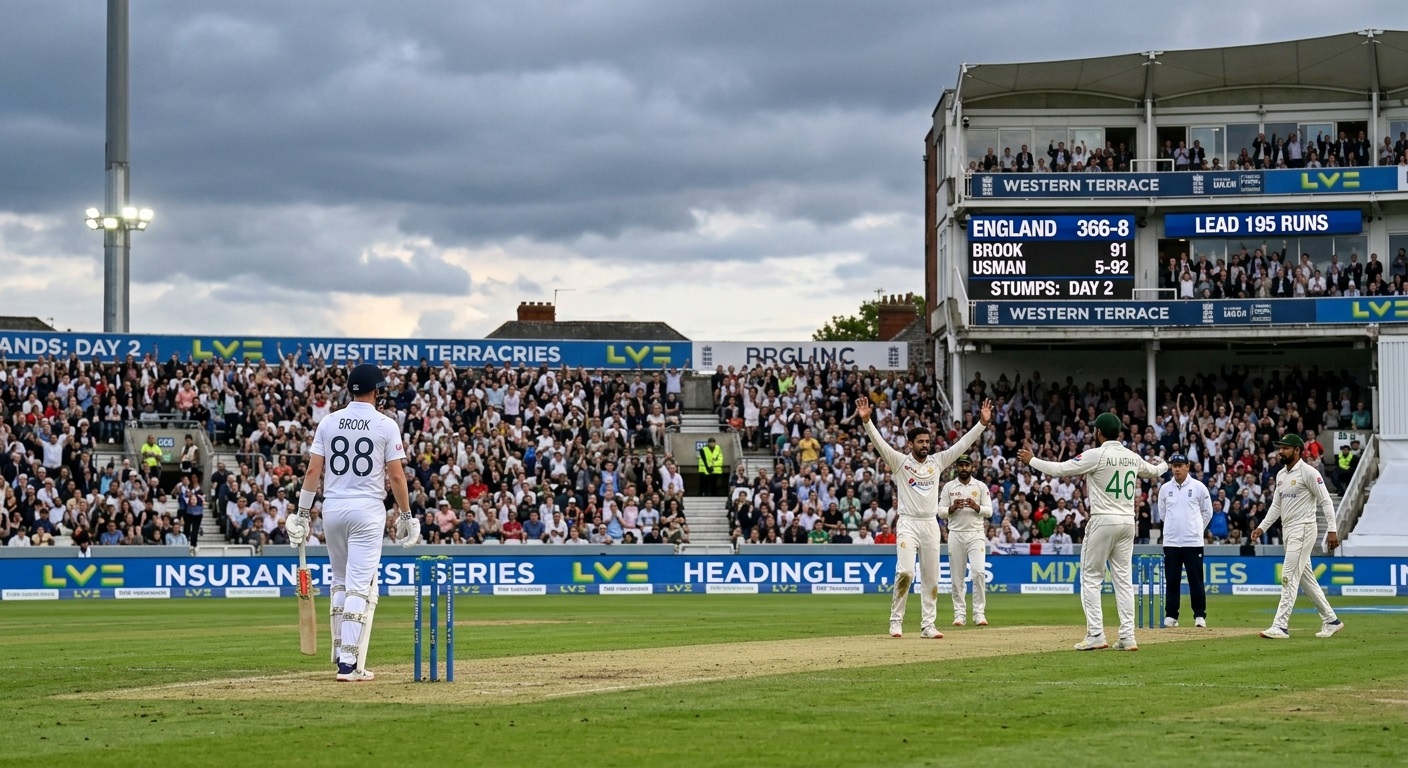
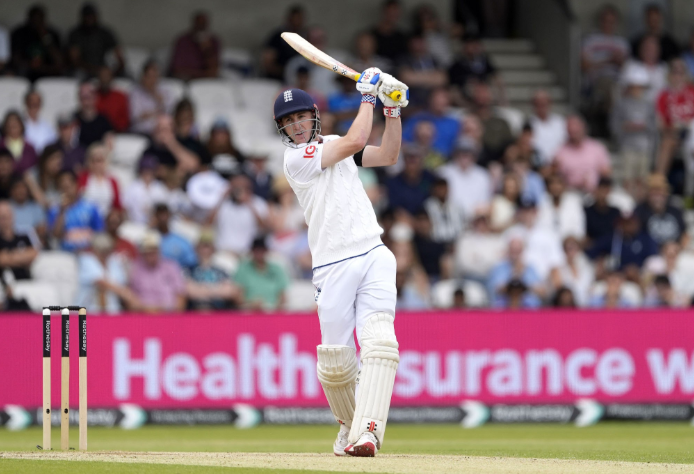
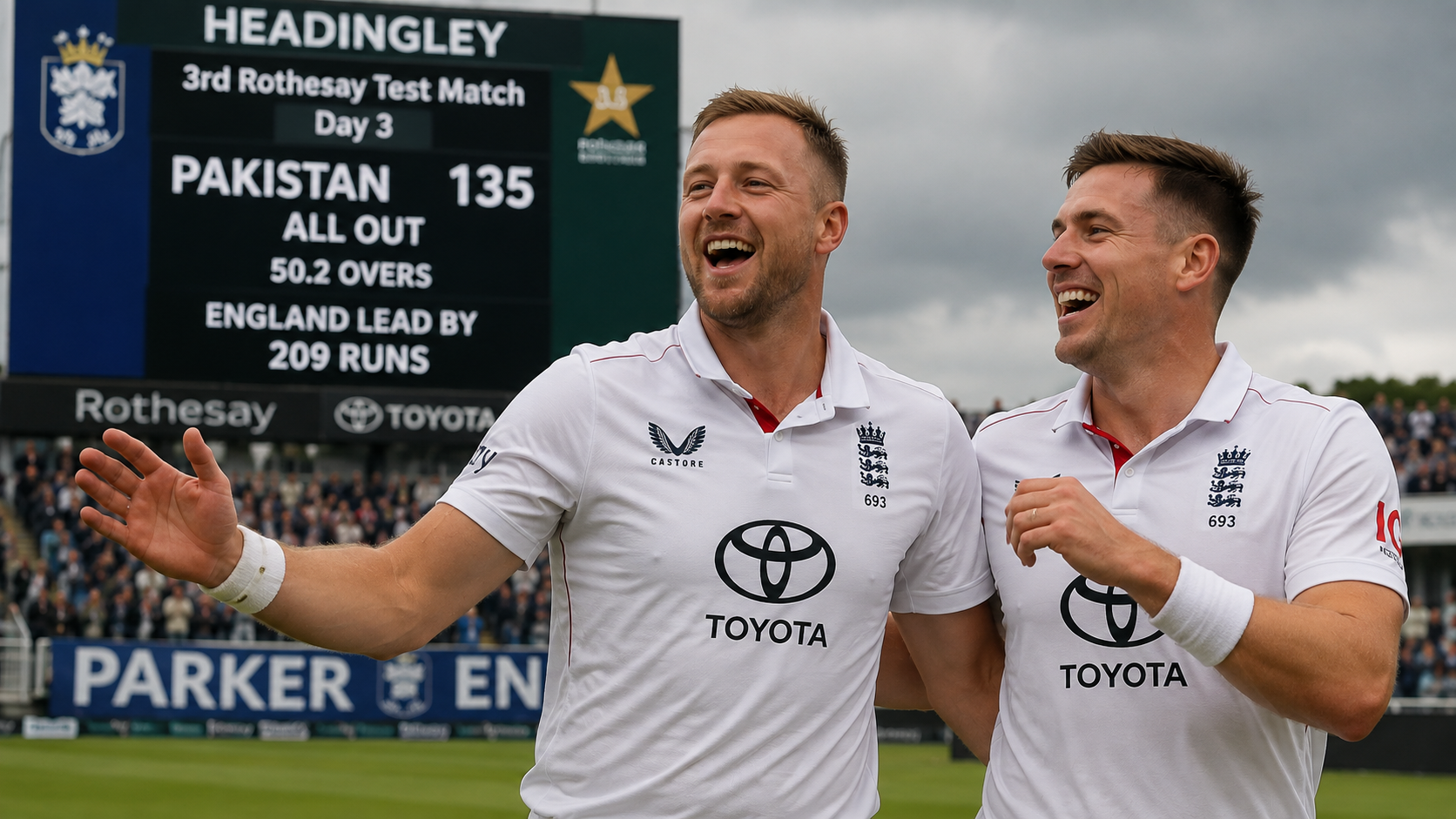
Harry Brook 91 England vs Pakistan: Fielding lapses at the elite level of Test cricket carry an unforgiving penalty. When Pakistan stand-in captain Salman Ali Agha spilled a diving second-slip opportunity off Khurram Shahzad early in the second day’s play at Headingley, Harry Brook sat on just 1 run. What followed was a ruthless exhibition of counter-attacking red-ball batting.
Harry Brook powered his way to a 93-ball 91, transforming a brief window of Pakistani optimism into a commanding 195-run lead. By stumps on Day 2, England reached 366-8 in response to Pakistan’s fragile first-innings total of 171.
This tactical match report breaks down how a single missed chance reshaped the trajectory of the first Test, analyzes the technical evolution of England’s middle order, and evaluates the debut five-wicket performance of Pakistani left-arm spinner Ali Usman.
The Turning Point: How a Dropped Slip Catch Re-Oriented Day 2
Headingley’s second day began under gray Yorkshire skies following a total morning washout. When play resumed with England at 112-2, Pakistan needed immediate breakthroughs to capitalize on their early bowling efforts from Day 1.
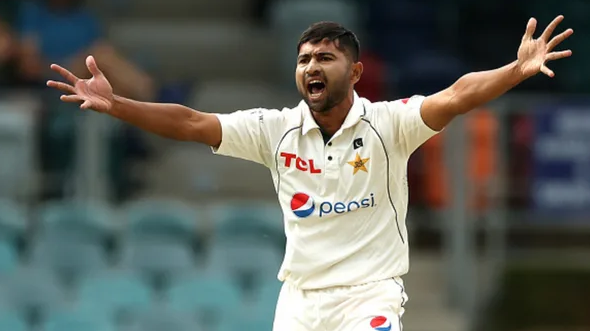
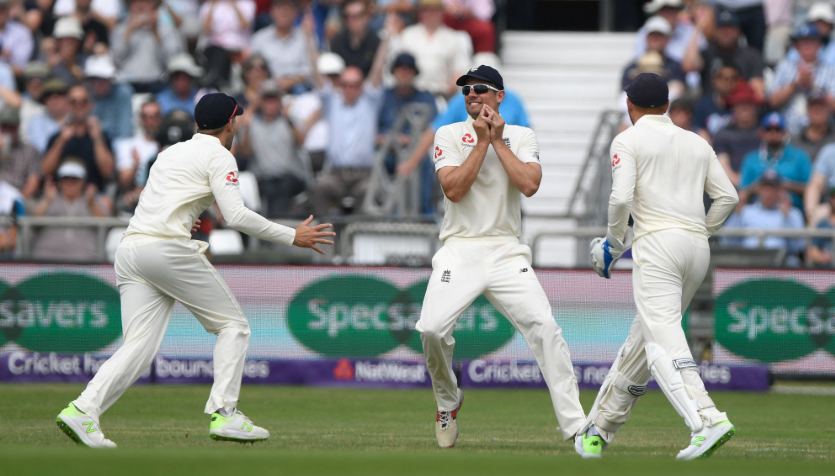
The moment arrived when Khurram Shahzad induced a late, square-shaped nibble from Harry Brook. The edge flew low and to the right of second slip. Salman Ali Agha, filling in as captain for the injured Babar Azam, adjusted late, dove frantically, but grassed the opportunity.
Crucial Takeaway: In Test cricket, reprieve penalties compound exponentially when granted to top-ranked batters. Following his drop on 1, Harry Brook scored 90 additional runs off just 92 deliveries, executing boundaries at a strike rate of 97.84.
The Cost of Extra Lives: Harry Brook’s Scoring Run-Rate
- Runs before drop: 1 run (off 1 ball)
- Runs after drop: 90 runs (off 92 balls)
- Boundaries hit: 13 fours (52 runs scored purely in boundaries)
- Targeted areas: 62% of runs scored through the backward point and mid-wicket arcs
Pakistan’s seam attack struggled to recover its discipline after the drop. Shahzad’s figures suffered severely, finishing the day at 1-111 across 19 overs as Brook targeted anything short or wide of off-stump.
Tactical Analysis: England’s Post-Bazball Middle Order
With Ben Stokes stepping down from international Test cricket and Jacob Bethell out with an injury, England debuted a recalibrated middle order led by restored captain Joe Root. The partnership structures on Day 2 demonstrated a shift from hyper-aggressive aerial shots toward controlled, intent-driven strike rotation.
+------------------+------------------+---------------+-------------------+
| Partnership      | Batting Pair     | Runs Scored   | Balls Faced       |
+------------------+------------------+---------------+-------------------+
| 3rd Wicket       | Root & Cox       | 150 runs      | 194 balls         |
| 5th Wicket       | Brook & Lawrence | 120 runs      | 131 balls         |
+------------------+------------------+---------------+-------------------+
1. Jordan Cox’s Composed Maiden Fifty
Appearing in only his second Test match, Jordan Cox provided crucial stability alongside Joe Root. Cox compiled 73 runs off 106 balls, showing sound judgment off his back foot against Pakistan’s quicks. Although surviving a dropped return catch on 57 by Shahzad, Cox proved that England’s top-order depth remains formidable.
2. Joe Root’s Anchor Role
Re-appointed as full-time Test captain, Root played a disciplined 66 before succumbing to an lbw decision. Root focused on manipulating field placements, taking single options into the deep cover arc and allowing Cox and later Brook to dictate the boundary cadence.
3. Dan Lawrence’s Tactical Return
Recalled to fill the void left by Ben Stokes, Dan Lawrence crafted a slick 51. His 120-run alliance with Brook effectively buried Pakistan’s hopes of restricting England to a manageable first-innings lead.
Ali Usman’s Maiden 5-Wicket Haul: The Bright Spot for Pakistan
While Pakistan’s seamers yielded 4.82 runs per over, left-arm spinner Ali Usman delivered an impressive spell of slow left-arm bowling. Playing in only his third Test match, Usman took 5-92 across 23 overs, keeping Pakistan within touching distance of ending England’s innings.
Ali Usman Day 2 Spell Breakdown:
• Overs: 23.0
• Maidens: 2
• Runs: 92
• Wickets: 5
• Economy: 4.00
• Key Wickets: Jordan Cox (73), Harry Brook (91), Gus Atkinson (0), Ollie Robinson (0)
Usman broke the dangerous 150-run stand between Root and Cox by ripping a classical arm-ball off a dry patch, catching Cox’s outside edge through to Mohammad Rizwan.
Later in the day, Usman ended Harry Brook’s charge just nine runs short of what would have been his 11th Test century (and first at his home ground of Headingley). Pushing a ball fuller on a flatter trajectory, Usman beat Brook’s inside edge as the batter attempted a sweep, hitting the leg-stump directly.
Pakistan’s Defensive Breakdown: Leadership and Field Discipline
Leading a national team in England without premier batter Babar Azam presents severe operational pressure. Salman Ali Agha’s afternoon session illustrated how tactical field placements can decay under sustained scoreboard movement.
Pro-Tip for Captaincy Analysis: When a bowling team drops two catches in two sessions (Brook at 1, Cox at 57), defensive field changes often compound seam bowler fatigue. Pakistan allowed 42 single-rotations in the 20 overs following tea due to deep-set boundary catchers.
An incident highlighting Pakistan’s tactical frustration occurred late in the second session: after a ball deflected off Dan Lawrence’s pads, Salman Ali Agha attempted an aggressive throw from slip to execute a run-out, only to strike his own wicketkeeper, Mohammad Rizwan, in the back of the legs.
Key Match Figures at Stumps - Day 2:
• Pakistan 1st Innings: 171 all out (Josh Tongue 5-46, Ollie Robinson 5-51)
• England 1st Innings: 366-8 (Harry Brook 91, Jordan Cox 73, Joe Root 66)
• Current Lead: England leads by 195 runs
• Match Status: 2 wickets remaining in England's 1st innings
Harry Brook 91 England vs Pakistan: Statistical Deep-Dive
To fully appreciate the impact of the Harry Brook 91 England vs Pakistan knock, examine his career trajectory and home ground performances:
- Headingley Record: Harry Brook has now missed out on a home century twice in consecutive years at Headingley, falling for 99 against India and 91 against Pakistan.
- Career Red-Ball Ranking: As the ICC #1 ranked Test batter, Brook’s strike rate against spin in 2026 stands at an elite 84.2.
- Pace vs. Spin Efficiency: Brook scored 58 of his 91 runs off pace (63.7%) at a strike rate of 105.4, while accumulating 33 runs off spin at a strike rate of 86.8.
The Harry Brook 91 England vs Pakistan performance underscores how quickly a game moves when modern top-order batters capitalize on opponents’ fielding errors.
Match Scenario Outlook: Days 3 & 4 Strategy
England enter Day 3 holding a 195-run lead with Jofra Archer and the tail at the crease. To force a result despite early rain delays, England’s path to victory is straightforward:
- Target Lead: Extend the first-innings lead past 220 runs within the first 45 minutes of Day 3.
- Bowling Strategy: Utilize Josh Tongue’s steep bounce and Ollie Robinson’s seam movement while the pitch retains residual moisture under the morning covers.
- Pakistan’s Requirement: Clear the remaining two wickets instantly and build a minimum 300-run second-innings target to challenge England in the fourth innings.
Frequently Asked Questions
What was the key score impact of the Harry Brook 91 England vs Pakistan innings?
Harry Brook was dropped on 1 run by Salman Ali Agha at second slip off Khurram Shahzad. Brook added 90 more runs off 92 balls, propelling England to 366-8 and securing a commanding 195-run first-innings lead by stumps on Day 2.
How did Ali Usman perform during the Harry Brook 91 England vs Pakistan match?
Pakistan left-arm spinner Ali Usman claimed his maiden Test five-wicket haul, finishing Day 2 with figures of 5-92 in 23 overs. His spell included the key wickets of Jordan Cox (73) and Harry Brook (91).
Why was Babar Azam missing from the Pakistan lineup?
Babar Azam was ruled out of the first Test at Headingley due to an injury sustained during pre-series practice. In his absence, Salman Ali Agha assumed stand-in captaincy duties for Pakistan.
Who performed best with the ball for England in Pakistan’s first innings?
England’s seam duo of Ollie Robinson (5-51) and Josh Tongue (5-46) split all ten wickets equally on Day 1, dismantling Pakistan’s first innings for a low score of 171 runs.
How many runs does England lead Pakistan by at the end of Day 2?
At the close of Day 2 at Headingley, England reached 366-8, establishing a 195-run lead over Pakistan’s first-innings score of 171.
Has Harry Brook scored a Test century at Headingley?
No. Despite being his home ground for Yorkshire, Harry Brook has missed out twice in narrow fashion at Headingley, scoring 99 against India and 91 against Pakistan.
Conclusion
The second day at Headingley highlighted a fundamental truth of Test cricket: elite teams capitalise relentlessly on dropped chances. Harry Brook’s explosive 91, supported by fifties from Jordan Cox, Joe Root, and Dan Lawrence, has put England in total control of the first Test with a 195-run lead.
For Pakistan to salvage this match, their top order must deliver a resilient second-innings performance and eliminate defensive lapses in the field.
What’s Next? Follow live over-by-over updates and ball-tracking analysis as Day 3 resumes at Headingley. Share your predictions on whether Pakistan can wipe out England’s lead in the comments below!
Read more sports news and latest updates
Read more cricket news and latest updates






Leave a Reply