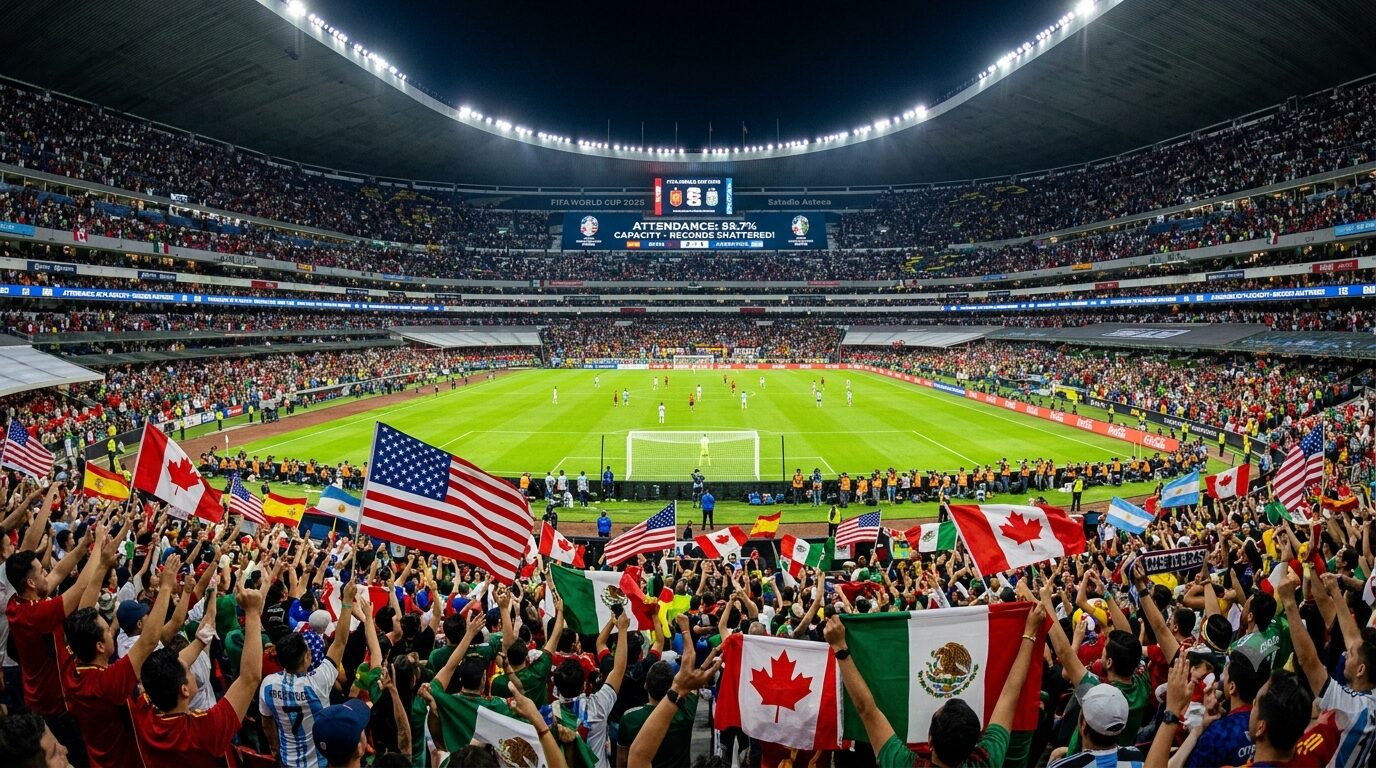
FIFA World Cup 2026 records: The final whistle has blown, the confetti has settled, and the history books have been completely rewritten. The FIFA World Cup 2026, hosted jointly by the United States, Canada, and Mexico, will go down as a monumental turning point in the history of international sports. By expanding the tournament structure to an unprecedented 48-team layout, football’s global governing body took a massive gamble on scale—and it paid off beyond anyone’s wildest expectations.
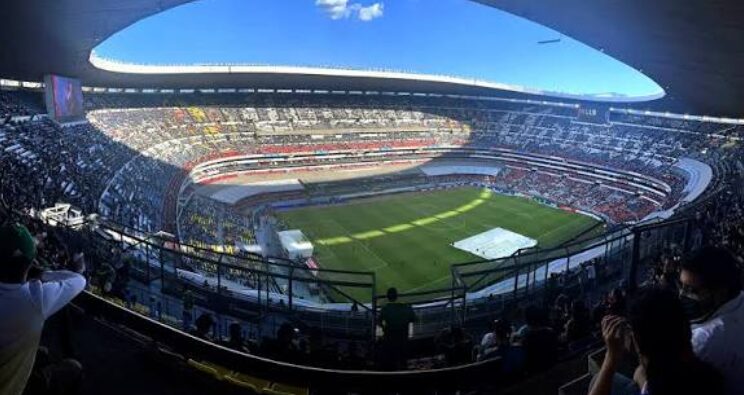
From packed legendary venues like Mexico City’s Estadio Azteca to booming digital engagement across continents, the tournament didn’t just break existing commercial benchmarks; it obliterated them. As Spain celebrated a hard-fought victory over Argentina to claim the ultimate crown, the operational data confirmed that this expansion altered the financial, structural, and cultural landscape of modern sports entertainment forever.
The Massive Scale: Breaking Down the 48-Team Format
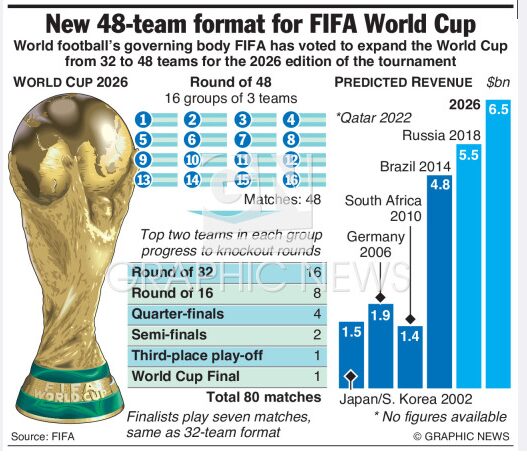
Expanding the group stages and knockout brackets from 32 teams to 48 meant transitioning the tournament into a staggering 104-match marathon. While critics initially feared that adding 16 extra national teams would dilute the quality of play or cause viewer fatigue, the reality proved otherwise. The wider variety of matches opened doors for emerging footballing nations, capturing new audiences and driving unprecedented attention back to the host regions.
Historic Stadium Attendance Figures
The most immediate proof of this success was found in the stadium seats. Spectators flooded into arenas across all three North American host nations, creating an electric atmosphere that sustained itself from the opening ceremonies straight through to the final match.
- The Cumulative Milestone: Over the course of the tournament, total physical attendance crossed a jaw-dropping 6.81 million spectators.
- The Turning Point: The highly anticipated Round of 32 clash between France and Sweden pushed the live ticket tally past the 5-million-spectator milestone.
- Shattering 1994’s High-Water Mark: This completely surpassed the long-standing ticket sales record of 3,587,538, which was set during the 1994 iteration in the United States.
- Near-Perfect Stadium Capacities: Despite ongoing public discussions regarding premium ticket pricing strategies, stadiums across the three host nations operated at an astounding 99.7% of physical capacity, proving that consumer demand remained entirely unfazed.
- Matchday Averages: Each match drew an impressive average of 65,351 live fans, keeping stadiums consistently packed throughout the month-long event.
Global Broadcasting Dynamics and Viewership Surges
If the physical turnstiles painted a picture of local enthusiasm, the global broadcasting metrics illustrated an absolute entertainment monopoly. Media networks across the world reported massive ratings spikes as fans tuned in from every time zone.
Broadcast Metrics and Audience Reach
Early figures shared by international broadcasting partners indicated that the tournament established standard-setting benchmarks for global reach:
- Six Billion Strong: Preliminary data suggested that total tournament viewership approached an incredible 6 billion global viewers, fueled by synchronized primetime slots in the Americas and high-demand broadcast windows in Europe, Africa, and Asia.
- Historical Comparison: For context, the highly celebrated 2022 final in Qatar between Argentina and France held the previous single-match record at 1.5 billion viewers, moving past the 2018 final’s draw of 1.12 billion. The multi-platform nature of the expanded 2026 edition pushed overall numbers far higher.
- Digital and Social Traction: By the conclusion of the Round of 16 alone, an estimated 5.2 billion individuals—approaching nearly two-thirds of the planet’s entire population—had interacted with official tournament content via television, streaming apps, or digital platforms at least once.
The Financial Framework: Revenue, Sponsorships, and Prize Money Allocation
Operating an event across an entire continent requires an immense financial engine. The sheer volume of matches generated a significant uplift in corporate interest, television rights bidding wars, and premium sponsorship tiers.
Breaking Down the Revenue Influx
The massive footprint of the event translated directly into unprecedented financial growth. Projected corporate earnings soared as media rights climbed 34% to hit nearly $4 billion, while baseline commercial sponsorships enjoyed a healthy 21% boost. Consequently, the fiscal year revenue projection surged to over 8 billion dollars (€7 billion). This represents a massive 56% increase over the total revenues recorded during the 2022 cycle in Qatar.
2022 Revenue: ███████████ $5.1B (Approx)
2026 Revenue: ███████████████████ $8.0B+ (+56%)
FIFA World Cup 2026 Records Team Allocations and Participant Compensation
Operating with a larger financial surplus allowed the tournament organizers to reallocate historic amounts of capital directly back into the global football ecosystem:
- Total Prize Money Pool: The overall payout fund received a late 15% increase, rising to a record-breaking $871 million (up from $440 million in 2022).
- The Champion’s Share: The victorious Spanish side walked away from the final holding a historic $50 million grand prize.
- Baseline Guarantees: Every single one of the 48 participating nations was guaranteed a minimum base payout of $12.5 million just for making the group stages.
- Club Benefits: One-quarter of the total $3.7 billion operational expenditure budget was funneled directly back into the domestic clubs and national associations to help offset player release periods.
While these record payouts were celebrated globally, analysts noted that the high baseline guarantees were necessary to help teams cover the logistical costs of traveling across a vast geographic landscape spanning three massive countries.
Looking to the Future: The 64-Team Centennial Vision
Never content to sit still, football organizers are already analyzing the operational data from this tournament to plan for the game’s next evolution. The structural success of managing 48 teams has accelerated conversations around further expansions.
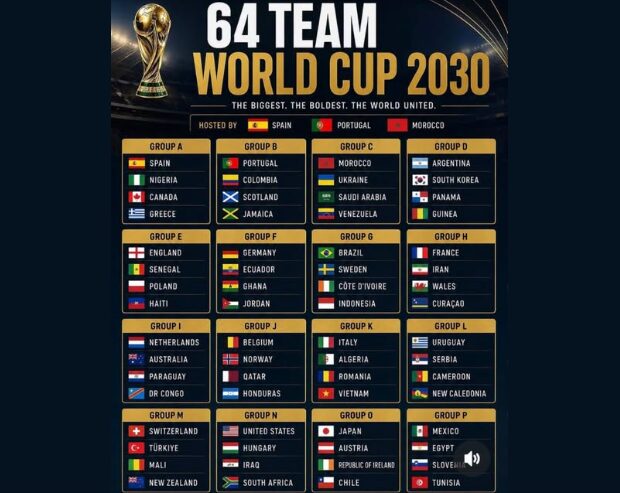
With the centennial anniversary of the tournament approaching in 2030, discussions have officially progressed regarding expanding the field even further to a 64-team format. The 2030 event is already slated to be a unique multi-continental celebration, with matches hosted across Spain, Portugal, and Morocco, alongside special celebratory opening fixtures in Uruguay, Argentina, and Paraguay. The proposal to expand the player pool even further has formally moved to the executive council level for institutional review, proving that the era of mega-tournaments is here to stay.
Frequently Asked Questions
What was the official total attendance for the tournament?
Independent calculations across all 104 played matches reported a total physical attendance of 6.81 million spectators, easily setting a new high-water mark for the sport.
How did the 2026 attendance compare to the 1994 tournament in the US?
The previous ticket sales milestone was 3,587,538, established during the 1994 tournament in the United States. The expanded tournament format easily eclipsed that record by over 3.2 million additional attendees.
How much prize money did the tournament winners receive?
The winning national team took home a historic $50 million prize out of the total $871 million pool. Every qualifying country was also guaranteed a minimum base payout of $12.5 million.
What percentage of stadium capacity was utilized during the event?
Despite some pre-tournament concern regarding high ticket costs, the matches achieved an incredible 99.7% average stadium capacity across all venues.
Are there plans to expand the tournament format again in the future?
Yes. Official discussions are underway regarding expanding the tournament format to 64 teams for the historic 2030 centennial edition, which will feature host cities across six different nations.
Conclusion
The expansion of the world’s primary football tournament proved that the global appetite for elite sports entertainment is stronger than ever. By successfully managing a massive 104-match schedule, the organizers proved that a larger field of competitors creates more revenue, attracts more eyeballs, and brings more communities together without hurting the quality of the sport. As focus shifts toward the centennial celebrations planned for 2030, the benchmark established across North America will serve as the blueprint for running mega-scale global sporting events for decades to come.
Stay ahead of the game! What are your thoughts on the expanded format? Do you want to see 64 teams in the next tournament cycle? Let us know your thoughts in the comments section below, and subscribe to our sports newsletter for daily breakdowns, tactical analysis, and exclusive industry updates.
Read more football news and latest updates