England Test Captain:
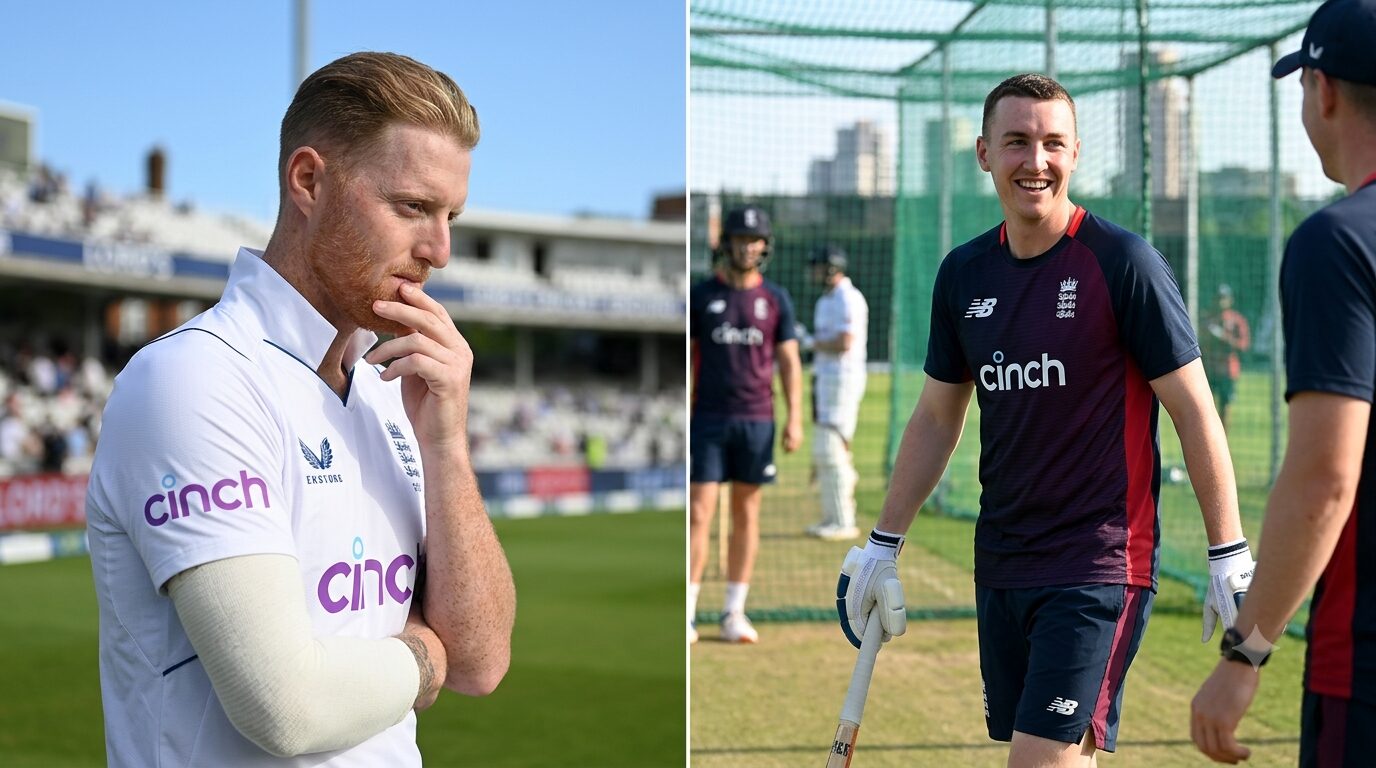
The dramatic announcement of Ben Stokes‘ retirement from international cricket sent shockwaves through the global cricket community. Following a crushing 160-run defeat against New Zealand at Trent Bridge—which sealed a 2-1 series loss for England on home soil—the 35-year-old talismanic all-rounder revealed that he was stepping away. Citing severe burnout after four grueling years at the helm, Stokes made it clear that his time wearing the three lions on the international stage had reached its absolute limit.
Yet, even as the curtain falls on one of the most explosive and revolutionary chapters in English cricket history, attention has instantly shifted to what comes next. The England cricket team finds itself at a critical crossroads, reeling from seven defeats in their last nine Test matches. The exhilarating but high-risk ‘Bazball’ era appears to have hit a definitive ceiling, and the squad is desperately in need of fresh leadership to steady the ship before the upcoming home series against Pakistan.
Before walking out of the dressing room for the final time, Stokes left the England and Wales Cricket Board (ECB) with an unequivocal piece of advice. He threw his 100 percent support behind 27-year-old batting prodigy Harry Brook to step into his shoes as the next long-term England Test captain.
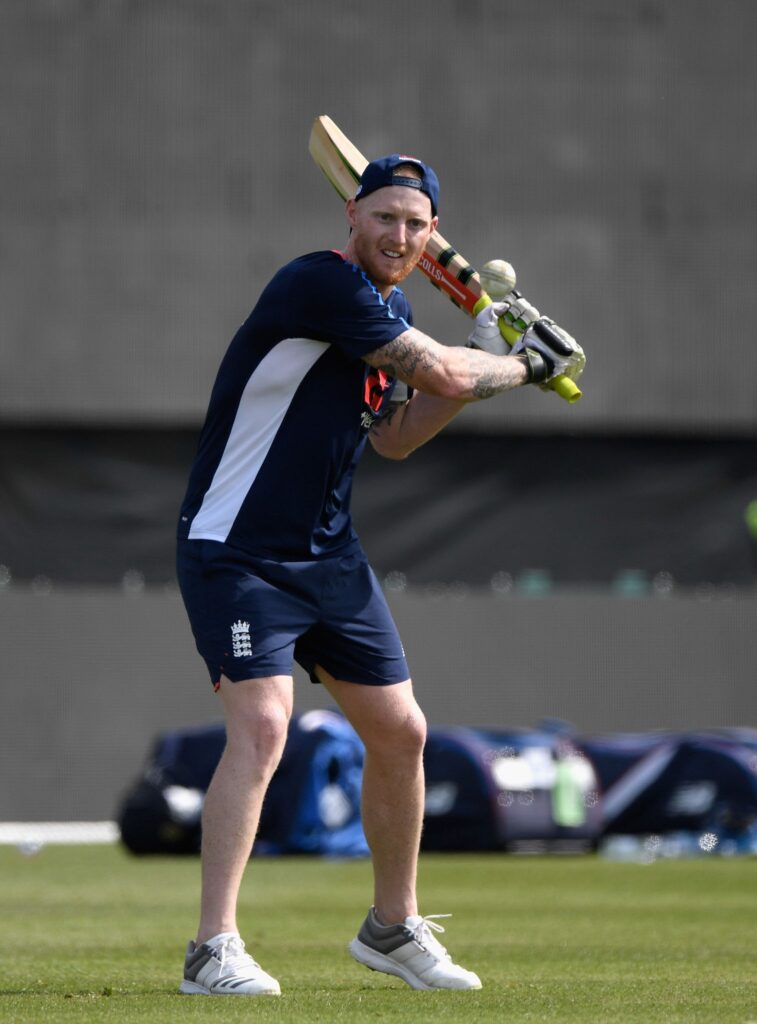
HAMILTON, NEW ZEALAND – FEBRUARY 17: England player Ben Stokes gives his team mates some fielding practice during England Cricket nets at Seddon park ahead of their T2O match against New Zealand Black Caps on February 17, 2018 in Hamilton, New Zealand. (Photo by Stu Forster/Getty Images)
The Sudden End of the Ben Stokes Era
To truly appreciate the gravity of Stokes’ endorsement, one must understand the circumstances surrounding his departure. For four and a half years, Ben Stokes, alongside head coach Brendon McCullum and Managing Director Rob Key, rewired the DNA of red-ball cricket. They turned a struggling, risk-averse team into a hyper-aggressive entertainment machine.
However, leadership at the highest level takes a massive toll. Stokes admitted to reporters that he felt completely “burnt out.” The physical demands of being a premier fast-bowling all-rounder, combined with the immense mental burden of modern captaincy, finally caught up with him.
His final act on the field was a poetic, albeit unsuccessful, encapsulation of his entire philosophy. Tasked with chasing a monumental fourth-innings target of 373 runs at Nottingham, Stokes made the radical decision to promote himself to open the batting, attempting to shock the New Zealand bowling attack into submission. He was dismissed early, leaving England to slide to a heavy defeat on the final day.
While Stokes plans to continue playing domestic cricket for his county side, Durham, he firmly shut down any romantic notions of an international comeback for the highly anticipated Ashes series. When asked if the allure of playing Australia one last time might change his mind, Stokes was resolute:
“I’m done. I know it’s the Ashes, but I’ll probably be watching it in a hospitality box somewhere.”
Why Harry Brook is Primed for Leadership
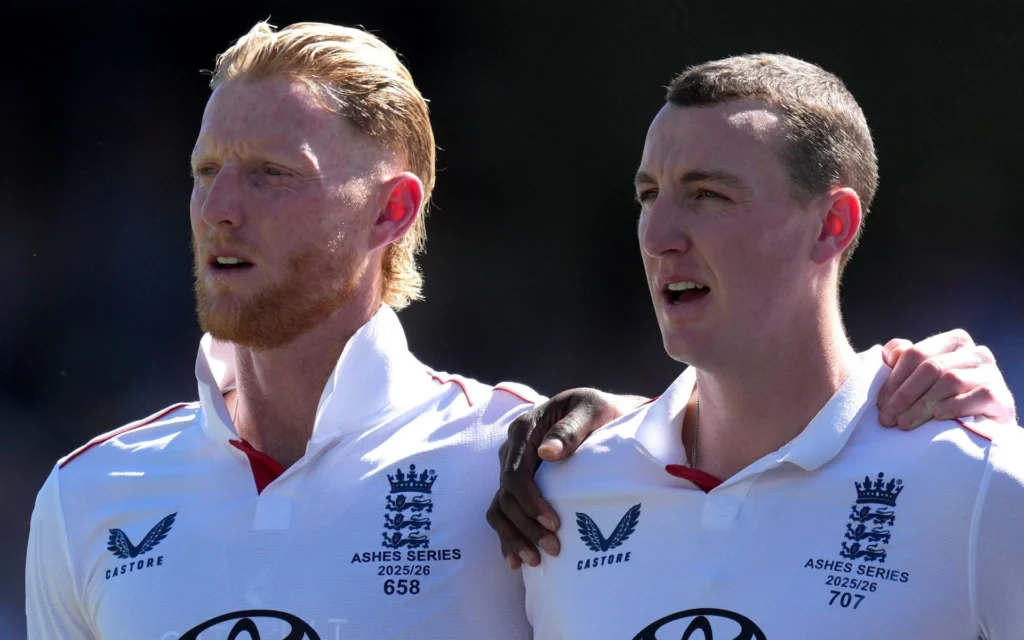
With Stokes gone, the spotlight centers squarely on Harry Brook. For anyone who has tracked Brook’s meteoric rise through the ranks, his position as the natural heir apparent is obvious. The Yorkshireman already leads England’s white-ball teams and holds the title of official vice-captain for the Test squad.
From a purely technical standpoint, Brook possesses the rarest of commodities in modern international cricket: an unshakeable security in his own game. Through 38 Test matches, Brook has maintained an astronomical batting average of over 53. His ability to score rapidly across all conditions makes him a rare talent who can bridge the gap between traditional test batting and the ultra-aggressive style England has cultivated.
Stokes highlighted that Brook’s appointment would follow the natural progression of elite cricket infrastructure:
Joe Root (Former Captain) ➔ Ben Stokes (Vice-Captain steps up)
Ben Stokes (Former Captain) ➔ Harry Brook (Vice-Captain steps up)
“You are asked to be vice-captain for a reason,” Stokes explained at his post-match press conference. “I was vice-captain under Joe for a long time. It’s the natural progression; if the captain is not there, you step up. There is absolutely no reason why Harry shouldn’t be asked to do that.”
Overcoming Off-Field Hurdles and Controversies
The path to the England Test captaincy is rarely smooth, and Brook’s journey has already faced significant speed bumps. The leadership question became complicated during the New Zealand series when Stokes was forced to sit out the second Test at The Oval due to breaking a midnight team curfew. Instead of the vice-captain taking charge, the ECB turned to veteran former skipper Joe Root to lead the team.
This decision stems from an off-field incident in Wellington, New Zealand, prior to England’s difficult 2025-26 Ashes campaign in Australia. Brook found himself involved in an altercation with a nightclub bouncer, an event that directly led team management to implement strict curfews. As punishment and a protective measure, Brook was temporarily bypassed for leadership duties.
Stokes, however, downplayed those past issues, making it clear that off-field growth is part of the maturation process for any young player thrust into the global limelight. He indicated that the structural decisions made by the board during that turbulent period were completely out of his hands:
“I know with all the controversy over the last couple of weeks, decisions were made. They were decisions I was not part of making… If I was to be asked who I think should do it, I would be throwing my 100 percent support behind Harry Brook.”
The Decline of Bazball and the Tactical Shift Ahead
The new captain will not just be stepping into a vacancy; they will be stepping into an identity crisis. The heavy defeat at Trent Bridge exposed structural cracks in the team’s approach. Losing seven out of their last nine matches indicates that opposition teams have successfully mapped out counter-strategies to England’s relentless aggression.
When questioned about whether Brendon McCullum and Rob Key remain the right figures to guide the national team forward, Stokes gave a remarkably candid assessment that lacked his usual fiery defense of the system:
“What me, Brendon, and Rob have managed to do over four-and-a-half years, I’m not going to lie, it’s been an interesting ride. We’ve had incredible highs and some pretty low lows as well. It’s always worked and connected pretty well in terms of what we’ve wanted to achieve. It doesn’t always work out the way you want it to work out.”
This subtle shift in tone hints at an underlying truth: the purely chaotic nature of early Bazball must evolve. The next leader needs to inject a layer of tactical flexibility—knowing when to protect a wicket, when to build a traditional partnership, and when to unleash aggressive stroke play.
The Roadmap: England’s Critical Transition Phase
The incoming captain faces an immediate, high-stakes test with a three-match home series against a disciplined Pakistan side scheduled to begin in August. There is no luxury of an extended honeymoon period or low-pressure warm-up matches.
The ECB management must execute a seamless transition plan across three distinct phases:
Phase 1: Immediate Appointment and Staff Alignment
The ECB must officially confirm the new captain within the next fortnight. This allows the new leader to sit down with head coach Brendon McCullum to establish clear boundaries, redefine selection policies, and determine how much of the aggressive blueprint will be retained.
Phase 2: Tactical Refinement in the Dressing Room
The team needs to move away from an “aggression at all costs” mindset. The new captain must work closely with senior figures like Joe Root to re-introduce situational awareness into England’s batting order.
Phase 3: Cultural Stabilization
Following recent curfew violations and off-field disciplinary issues, the new leader must establish a culture of accountability. Rebuilding public trust and dressing-room discipline is just as critical as winning on the pitch.
Frequently Asked Questions
Why did Ben Stokes retire from international cricket?
Ben Stokes retired due to profound physical and mental burnout. After four and a half years of captaining the Test team under the intense, high-energy demands of the Bazball philosophy, alongside his roles as a middle-order batsman and primary all-rounder, he concluded that he could no longer sustain the required standards at the international level.
What are Harry Brook’s statistical credentials for the role?
Harry Brook has put up exceptional numbers in his Test career so far. Across 38 Test matches, he has maintained a sensational batting average of over 53. His proved ability to dominate world-class bowling attacks makes him a certain selection in the starting XI, which is a vital prerequisite for any international captain.
Why didn’t Harry Brook captain the side when Stokes was absent?
Brook was passed over for the captaincy during a recent Test match at The Oval due to disciplinary concerns. Following an altercation with a nightclub bouncer in Wellington before the 2025-26 Ashes series, team management enforced strict behavioral rules. Former captain Joe Root temporarily filled the vacancy to give Brook more time to mature away from the intense media spotlight.
Is the ‘Bazball’ era completely over for England?
While the extreme, uncompromised version of Bazball appears to have run its course following seven defeats in nine Tests, the foundational principles of positive intent, fearlessness, and pushing for victories will likely remain a core part of England’s cricketing identity.
When will England play their next Test series?
England’s next major red-ball assignment is a highly anticipated three-Test home series against Pakistan, set to commence in August. This series will serve as the official launchpad for the team’s new leadership structure.
Ben Stokes’ exit marks the conclusion of one of the most transformative eras in red-ball history. He leaves behind a legacy of fearlessness that permanently altered how Test cricket is viewed worldwide. However, the current slump in form proves that inspiration alone is no longer enough; the team requires structural stability and tactical evolution.
Harry Brook represents the future of English cricket. He has the unreserved backing of his legendary predecessor, the tactical awareness gained from leading the white-ball squads, and a historic batting average that commands absolute respect. If the ECB can look past his recent youthful indiscretions and empower him with the necessary support systems, Brook has all the ingredients to become a defining captain of his generation.
What do you think about Ben Stokes’ decision to retire? Is Harry Brook truly ready to handle the pressure of reviving England’s red-ball fortunes, or should the ECB look toward a more experienced option like Joe Root for stability? Share your thoughts in the comments below, and don’t forget to share this breakdown with your fellow cricket fans!
Read more cricket news and latest updates