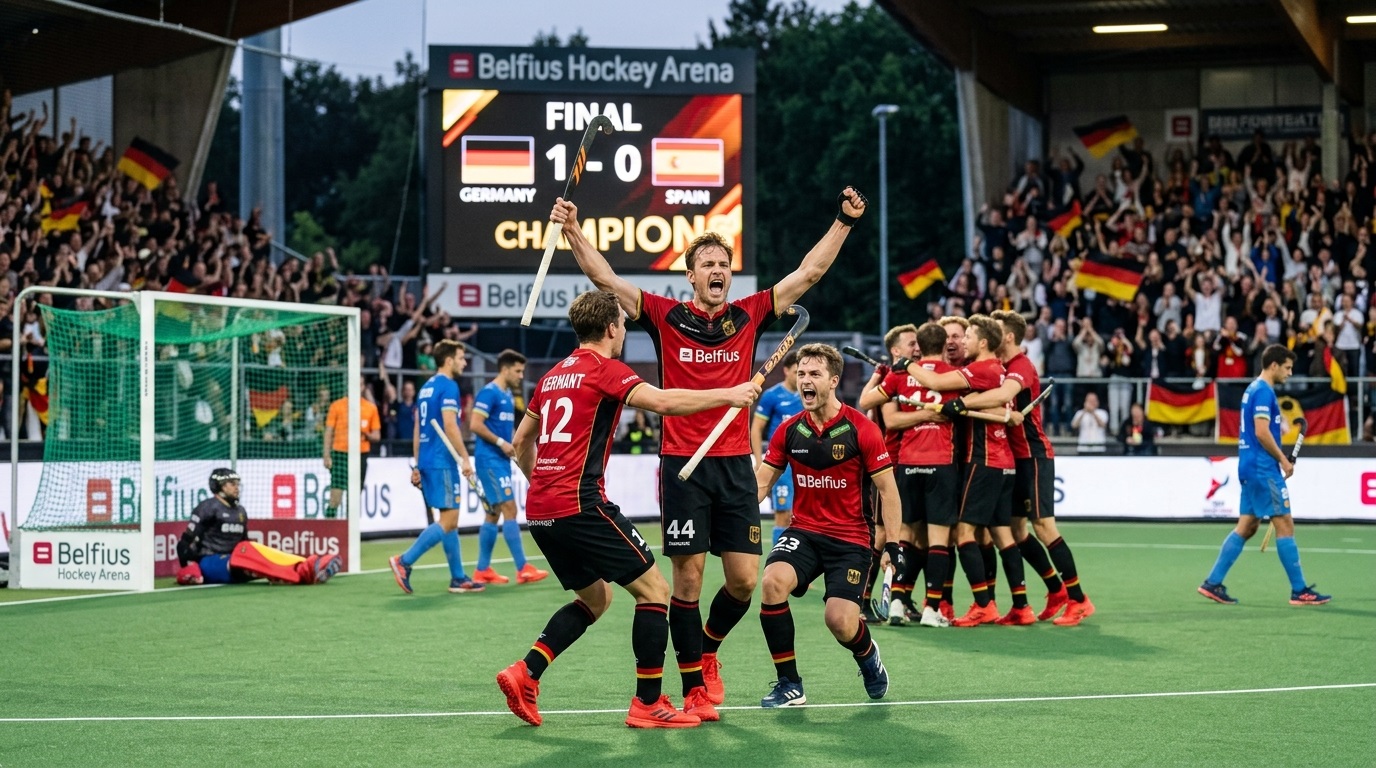
In a championship battle defined by defensive discipline and razor-thin margins, Germany retained their crown at the Men’s Hockey World Cup 2026 with a hard-fought 1–0 victory over Spain. Played before a capacity crowd at the Belfius Hockey Arena in Wavre, Belgium, the final showcased two tactical masterminds attempting to unpick rigid European defensive structures.
While Spain constructed an impressive defensive barrier during the opening 30 minutes, a single moment of brilliance in the 44th minute by forward Michel Struthoff proved decisive. Germany’s ability to maintain composure during late disciplinary pressure—specifically playing short-handed following a green card—sealed their status as the dominant force in international hockey.
This comprehensive report examines the tactical adjustments, key statistical metrics, and pivotal moments that decided the Men’s Hockey World Cup final.
Match Overview & Key Highlights
| Match Parameter | Men’s Hockey World Cup Final Details |
| Fixture | Germany vs. Spain |
| Final Score | Germany 1 – 0 Spain |
| Decisive Goal Scorer | Michel Struthoff (44th Minute, Field Goal) |
| Venue | Belfius Hockey Arena, Wavre, Belgium |
| Disciplinary Events | Justus Warweg (Germany) – Green Card (49th Minute) |
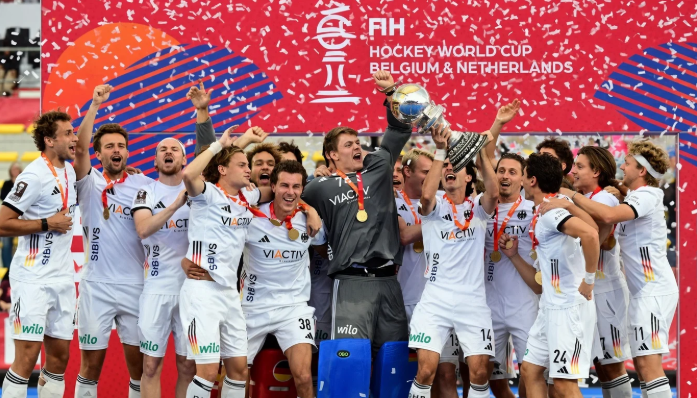
| Tournament Status | Germany successfully retains Men’s Hockey World Cup title |
Tactical Breakdown: How the Final Was Won
1. The First Half Defensive Gridlock
From the opening whistle, Spain adopted a disciplined mid-block defensive structure designed to deny space in the central channels. By positioning their midfielders tight to the half-court line, Spain effectively blocked direct passing lanes into Germany’s dangerous front three.
Germany dominated early ball possession, circulating play across their backline of line defenders and half-backs. However, penetrating Spain’s shooting circle proved difficult. Every time Germany attempted to break through the middle, Spanish defenders doubled up to force turnovers. Consequently, the first two quarters of this Men’s Hockey World Cup clash ended goalless, with both sides recording minimal shots on target.
Pro Tip for Coaches: When facing a low or mid-block defensive system, avoid forcing central passes. Use wide perimeter shifts to stretch the defense laterally before attempting 45-degree entry passes into the pocket.
2. The 44th-Minute Breakthrough
As the third quarter progressed, German head coach pushed the line higher up the turf, increasing counter-pressing intensity. The strategic shift yielded results late in the third period.
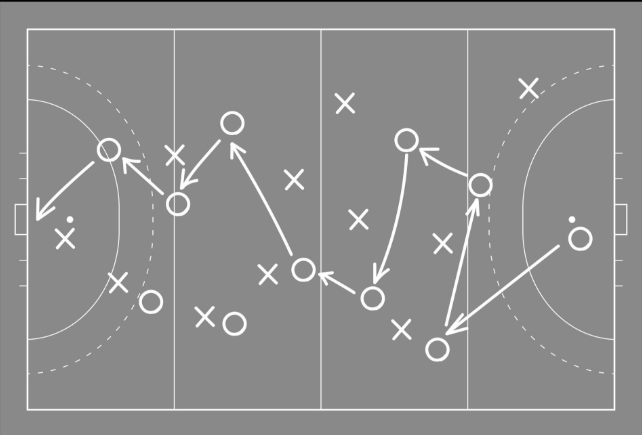
In the 44th minute, Germany launched a rapid turnover attack along the right flank. A precise baseline exchange allowed the ball to bypass Spain’s secondary defensive line. Michel Struthoff positioned himself perfectly inside the shooting circle, receiving a sharp pass and driving a low shot past the Spanish goalkeeper into the bottom corner.
[Turnover on Right Flank] ➔ [Baseline Penetration] ➔ [Michel Struthoff Strike (44')] ➔ [Germany 1-0 Lead]
3. Germany’s Disciplinary Crisis and 10-Man Defense
The dynamic of the Men’s Hockey World Cup final shifted dramatically in the fourth quarter when Spain threw numbers forward in search of an equalizer. In the 49th minute, tension boiled over as Germany’s Justus Warweg received a green card, triggering an automatic two-minute suspension.
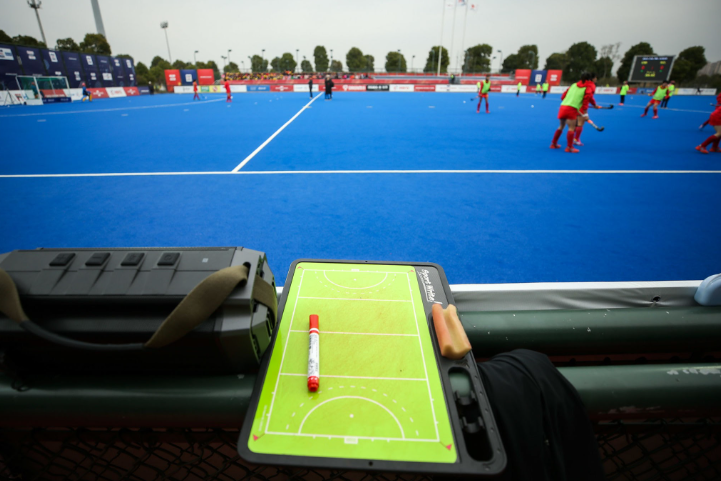
Playing with 10 players, Germany dropped into a compact low block. Spain launched a series of high-intensity attacks, attempting to exploit numerical superiority along the wings. Germany’s defensive unit responded with exceptional spatial awareness:
- Goalkeeper Command: Organizing line-of-sight clearances during continuous aerial deliveries into the box.
- First-Runner Commitment: Negating Spanish drag-flick setups by closing down space immediately upon injection.
- Outlet Management: Preserving ball safety along the sidelines to consume time on the card clock.
By surviving the two-minute numerical disadvantage unscathed, Germany broke Spain’s momentum and controlled the remaining minutes through intelligent game management.
Statistical Performance Comparison
Analyzing the underlying performance data reveals how closely contested this Men’s Hockey World Cup final was across all four quarters.
| Metric | Germany | Spain | Notes |
| Goals | 1 | 0 | Michel Struthoff (44′) |
| Total Shots | 9 | 6 | Germany created higher quality chances |
| Shots on Target | 4 | 2 | Spain struggled to test the keeper cleanly |
| Circle Entries | 18 | 21 | Spain controlled field position in Q4 |
| Possession % | 54% | 46% | Germany controlled early tempo |
| Penalty Corners | 3 | 4 | Solid defensive execution on set pieces |
| Green Cards | 1 | 0 | Justus Warweg (49′) |
Key Takeaways from Germany’s Championship Defense

- Patience Over Panic: Germany did not force high-risk plays despite spending 43 minutes tied at 0–0 in a high-stakes final.
- Clinical Execution: Winning championship matches often requires taking advantage of limited opportunities; Struthoff converted Germany’s single clear opening in Q3.
- Defensive Mastery Under Pressure: Withstanding a late 10-man suspension in the Men’s Hockey World Cup final demands elite tactical organization and emotional composure.
Frequently Asked Questions
What was the final score in the Men’s Hockey World Cup final?
Germany defeated Spain 1–0 in the final match of the Men’s Hockey World Cup. A single field goal scored in the 44th minute proved to be the difference between the two teams.
Who scored the winning goal for Germany in the final?
Forward Michel Struthoff scored the winning goal in the 44th minute. Struthoff capitalized on a baseline attack to slot the ball past the Spanish goalkeeper, securing the championship for his country.
Where was the Men’s Hockey World Cup final played?
The final took place at the Belfius Hockey Arena in Wavre, Belgium. The venue hosted thousands of international field hockey supporters for the tournament’s showcase event.
Why did Germany play with 10 players in the fourth quarter?
German player Justus Warweg received a green card in the 49th minute of the match. According to international field hockey rules, a green card results in a mandatory two-minute temporary suspension.
How many times has Germany won the Men’s Hockey World Cup?
Germany remains one of the most successful nations in field hockey history. By winning this match, Germany successfully defended their world title, adding another historic victory to their trophy cabinet.
Germany’s 1–0 victory over Spain in the Men’s Hockey World Cup final highlights the importance of tactical discipline, patience, and defensive execution in elite international sport. While Spain executed a strong defensive game plan for large periods of the match, Michel Struthoff’s 44th-minute strike delivered the crucial breakthrough. By holding firm during late pressure—including a two-minute card suspension—Germany proved why they remain the elite standard in men’s field hockey.
Read more sports news and latest updates