


Women’s T20 World Cup Final Title at Lord’s: The gap between the Australian women’s cricket team and the rest of the world has never felt wider. In front of a raucous, sold-out crowd at the historic Lord’s Cricket Ground, Australia put on a masterclass in modern T20 cricket, crushing arch-rivals England by seven wickets to claim their seventh ICC Women’s T20 World Cup title.
It was a display of pure, unadulterated dominance. Entering the match as heavy favorites, the Australians did not just win; they systematically dismantled an elite England side in every facet of the game. Led by a clinical bowling performance early on and a blistering, century-long second-wicket partnership between veteran Beth Mooney and rising star Phoebe Litchfield, Australia chased down a competitive target of 151 with a staggering 17 balls to spare.

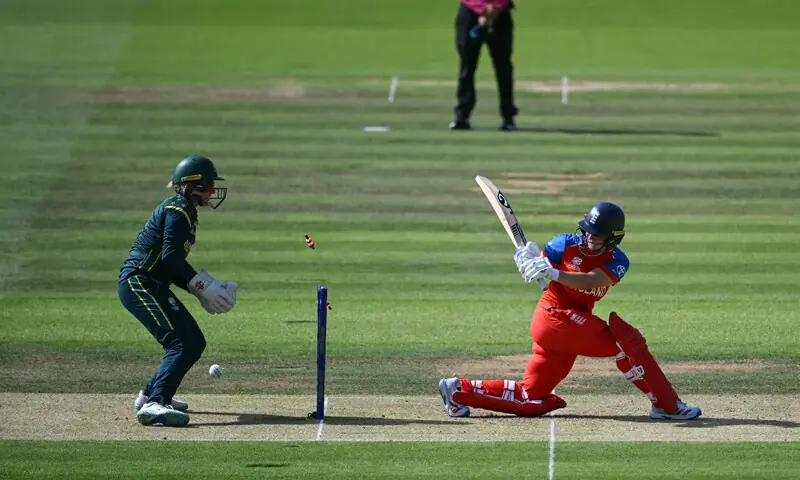
This victory solidifies a golden era of cricket that shows absolutely no signs of slowing down. For England, it was a harsh reminder of the psychological and physical stranglehold the Australians maintain over the global game, echoing the 16-0 multi-format Ashes routing from eighteen months prior. Here is the full, deep-dive tactical analysis of how the final was won and lost on the hallowed turf of Lord’s.
The First Innings: Australia’s Bowling Stranglehold
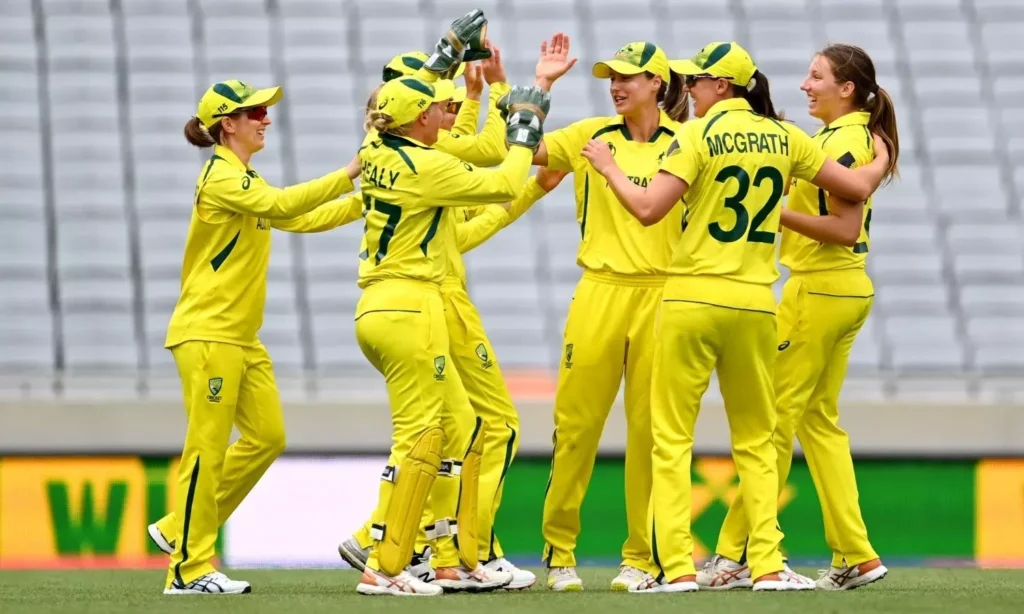
England’s hopes of hoisting the trophy on home soil rested on a flying start in the Powerplay. Instead, Australia’s disciplined bowling attack choked the life out of the host nation’s top order, reducing them to a sluggish 39-2 within the first six overs. The pitch offered just enough lateral movement, and the Australian bowlers exploited it ruthlessly.

The Early Breakthroughs
Young sensation Lucy Hamilton set the tone. Slanting a sharp delivery across England’s explosive opener Amy Jones, Hamilton forced a tentative drive that flew low to Georgia Voll at deep gully. Jones departed for just six, instantly putting England on the defensive.
Things went from bad to worse for the hosts when the tournament’s leading run-scorer, Danni Wyatt-Hodge, was undone by extra bounce. Facing Annabel Sutherland, Wyatt-Hodge attempted to tickle a ball down the leg side, only to manage a faint edge. Wicket-keeper Beth Mooney reacted with lightning reflexes, diving full-length to pluck a superb tumbling catch out of the air. The dismissal marked a historic milestone for Sutherland, who celebrated her 50th wicket in T20 Internationals in the grandest way possible.
Key Milestone: Annabel Sutherland claims her 50th T20I wicket by dismissing the tournament's top run-scorer, Danni Wyatt-Hodge.
Spin and Tight Lines Choke the Middle Order
Alice Capsey threatened a counter-attack, showing her immense raw power by launching Ash Gardner over deep mid-wicket for a spectacular six. However, the joy was short-lived. Australian skipper Sophie Molineux read Capsey’s intentions perfectly, altering her pace and line to clean up the young batter for 23 as she attempted an over-ambitious reverse sweep.
Just an over later, England’s veteran anchor Heather Knight was trapped plumb leg-before-wicket (lbw) for a mere two runs by the incredibly miserly Kim Garth. Garth was the unsung hero of the bowling innings, finishing with immaculate figures of 1-20 from her allocation of four overs. Her ability to build dot-ball pressure left England completely starved of boundaries.
The England Fightback: Sciver-Brunt and Kemp Resurrect the Innings
Teetering at a precarious position in the middle overs, England desperately needed a partnership to give their bowlers something to defend. They found it in the form of an unbroken 80-run stand between captain Nat Sciver-Brunt and the hard-hitting Freya Kemp.
| Batter | Runs | Balls Faced | Boundary Count |
| Nat Sciver-Brunt | 58* | 53 | 5 Fours |
| Freya Kemp | 44* | 28 | 3 Fours, 1 Six |
Sciver-Brunt played a quintessential captain’s knock, accumulating runs through intelligent placement and hard running between the wickets. She anchored the back half of the innings, reaching a gritty half-century off 53 deliveries.

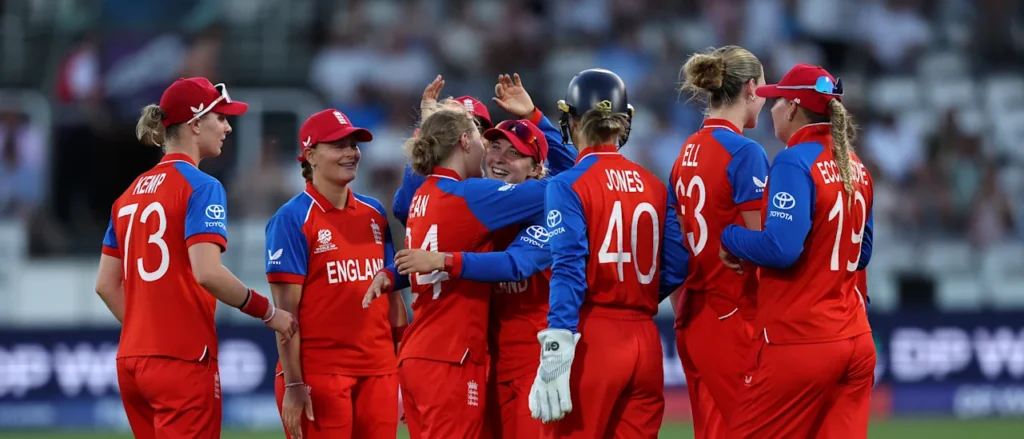
At the other end, Freya Kemp provided the much-needed fireworks. Kemp injected immediate urgency into the stadium, striking a rapid 44 off just 28 balls. The highlight of her cameo came in the final over, where she danced down the track to smash a towering, straight six off Sophie Molineux.
Thanks to their late-innings acceleration, England dragged themselves to a respectable 150-4. While it gave the packed Lord’s crowd reason to cheer, the underlying consensus among tactical analysts was clear: having started from so far back due to their early collapse, England’s total was roughly 15 to 20 runs short against a batting lineup as deep as Australia’s.
The Chase: Mooney and Litchfield Flay the English Attack
If England harbored any illusions of putting Australia under pressure during the run chase, those dreams were shattered within the opening minutes. The Australian batting unit did not just chase the total; they attacked it with terrifying intent.
Setting the Tone
Georgia Voll signaled Australia’s aggressive blueprint from the very first ball of the innings, ruthlessly dispatching a delivery from Charlie Dean to the boundary fence. Though Voll fell in the succeeding over—dragging a ball from fast bowler Lauren Bell onto her own stumps for nine—her brief cameo set an unyielding psychological precedent.
A Masterclass in T20 Batting
What followed was a masterclass in modern T20 partnerships. Beth Mooney was joined out in the middle by Phoebe Litchfield, and together, they utterly demoralized the England bowling attack.
Instead of consolidating after the early wicket, Mooney and Litchfield put their feet firmly on the accelerator. They manipulated fields with ease, combining pristine textbook drives with audacious lofted strokes. By the end of the 10th over, Australia had rocketed to 98-1, effectively breaking the back of the chase before England could even recalibrate their fields.
- Phoebe Litchfield: Played an incredibly fluid innings, smashing two massive sixes on her way to a rapid 48 off 35 deliveries before being bowled by Charlie Dean.
- Beth Mooney: The consummate big-match player, Mooney anchor-accelerated her way to a brilliant 64 runs off 49 balls, showcasing why she remains one of the most feared white-ball batters in history.
By the time both set batters departed, the victory was a mere formality. Global icon Ellyse Perry walked to the crease to guide Australia home at an absolute canter. Perry was given a brief scare and a subsequent “life” when a diving catch by Sophie Ecclestone was sent upstairs, only for the TV umpire to controversially rule it out.
Fittingly, the match—and the tournament—concluded on a somewhat chaotic note for the host nation. With just a few runs needed, a wayward, tumbling delivery from Ecclestone slipped down the leg side for four wides, gifting Australia the championship and neatly summarizing England’s frustrating, messy day in the field.
Frequently Asked Questions
How many times has Australia won the Women’s T20 World Cup?
With this latest victory at Lord’s, Australia has officially won the ICC Women’s T20 World Cup a record seven times. They continue to be the most dominant team in the history of the tournament.
Who won the Player of the Match in the final?
While official tournament awards vary, Beth Mooney’s brilliant match-winning knock of 64 runs off 49 balls, combined with her spectacular diving catch behind the stumps to dismiss Danni Wyatt-Hodge, made her the standout performer of the final.
What was the turning point of the match?
The definitive turning point was the Powerplay of the first innings. Australia managed to restrict England to 39-2 while dismissing dangerous hitters like Danni Wyatt-Hodge and Amy Jones. This slow start meant England was always playing catch-up.
Where was the final played?
The final was held at Lord’s Cricket Ground in London, widely known as the “Home of Cricket.” The historic match was played in front of a completely sold-out crowd.
What milestone did Annabel Sutherland reach during the final?
Australian bowling all-rounder Annabel Sutherland claimed her 50th T20 International (T20I) wicket when she dismissed England’s star opener Danni Wyatt-Hodge in the early stages of the match.
Why was Ellyse Perry’s caught-out decision controversial?
During the closing stages of the chase, England’s Sophie Ecclestone appeared to take a low, diving catch to dismiss Ellyse Perry. However, upon review, the TV umpire determined that the ball had touched the grass before being cleanly trapped, giving Perry a controversial second life.
Conclusion
Australia’s seventh Women’s T20 World Cup title is a testament to an elite sporting culture built on depth, tactical flexibility, and unmatched big-match temperament. While teams like England and India have closed the athletic gap in patches, Australia’s ability to execute flawlessly under the immense pressure of a World Cup final remains completely unparalleled.
From Lucy Hamilton’s opening salvo to Mooney and Litchfield’s ruthless boundary-hitting, the Southern Stars proved yet again that they own the shortest format of the game. For cricket fans worldwide, this final wasn’t just a great game of sport—it was a masterclass in how to build a dynasty.
What do you think is the secret behind Australia’s generational dominance in women’s cricket? Can anyone stop them in the next cycle? Let us know your thoughts in the comments below!
Read more cricket news and latest updates