


Premier League 2026/27 Predictions: As the curtain rises on another thrilling English top-flight campaign, football fans worldwide are eagerly debating how the final standings will look come May 2027. To move beyond opinion and gut feeling, advanced statistical models now run complex algorithmic simulations to forecast the exact trajectory of all twenty clubs.
By executing 10,000 distinct season simulations—incorporating historical performance data, summer transfer window activity, squad depth, managerial changes, and betting market analytics—the supercomputer has generated its definitive predicted 2026-27 Premier League table.
Here is the comprehensive breakdown of where every team is expected to finish, from the summit of the title race down to the heartbreak of the relegation zone.

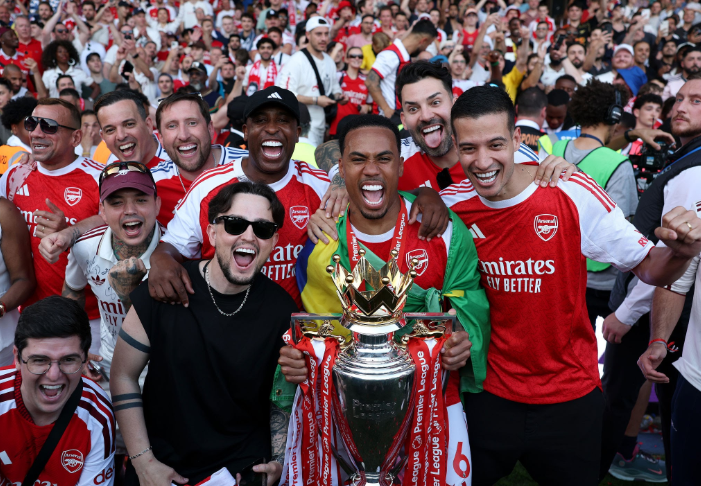
The Title Race for Premier League 2026/27 Predictions: Can Anyone Stop Arsenal’s Dominance?
After ending a 22-year drought to capture the Premier League title last season, Arsenal enter the 2026/27 campaign as firm favorites to achieve back-to-back domestic glory.
If the predictive data holds true, Mikel Arteta’s side will join an elite bracket of footballing royalty. Only three clubs in Premier League history—Manchester United, Manchester City, and Chelsea—have ever successfully retained the crown.
The supercomputer projects Arsenal to finish top with an expected points total of 85.2, giving them a dominant 50.6% probability of winning the league. Their tactical cohesion, defensively suffocating setup, and squad maturity give them a distinct edge over their nearest rivals.
Manchester City enter a New Era
Following the departure of Pep Guardiola, Manchester City find themselves navigating unfamiliar territory. Despite splashing out a club-record £116m fee for dynamic midfielder Elliot Anderson during the summer transfer window, City are forecasted to finish as runners-up for a second consecutive year.
The predictive model awards City an expected point tally of 81.5, narrowing the gap to Arsenal compared to last season’s seven-point deficit. However, with a 27.5% title probability, the transition period under new leadership keeps them just short of knocking Arsenal off their perch.
Champions League Qualification: The Fight for the Top Four
Behind the primary title contenders, the race for UEFA Champions League football promises to be fiercely competitive. The predictive model highlights a distinct gap between the top four clubs and the rest of the chasing pack.
| Predicted Rank | Club | Expected Points | Title Probability (%) | Top Four Status |
| 1st | Arsenal | 85.2 | 50.6% | Locked In |
| 2nd | Manchester City | 81.5 | 27.5% | Locked In |
| 3rd | Liverpool | 76.8 | 10.2% | High Probability |
| 4th | Manchester United | 75.1 | 7.3% | High Probability |
| 5th | Chelsea | 68.4 | 3.9% | Chasing Pack |
| 6th | Tottenham Hotspur | 64.2 | 0.4% | Outside Chance |
Liverpool’s F.C. Revival Under Andoni Iraola

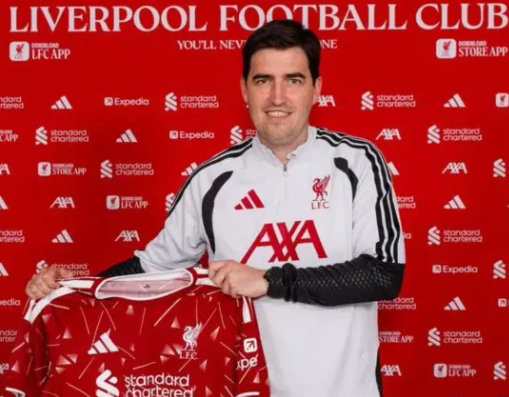
After a turbulent fifth-placed finish led to the departure of Arne Slot, Liverpool have turned to former Bournemouth boss Andoni Iraola to lead their new chapter. The supercomputer responds favorably to Iraola’s high-intensity pressing philosophy, predicting the Reds to jump two places into 3rd position with 76.8 expected points.
With a 10.2% chance of pulling off a surprise title triumph, Liverpool’s primary victory lies in restoring their elite European status.
Manchester United‘s Steady Progress Under Carrick

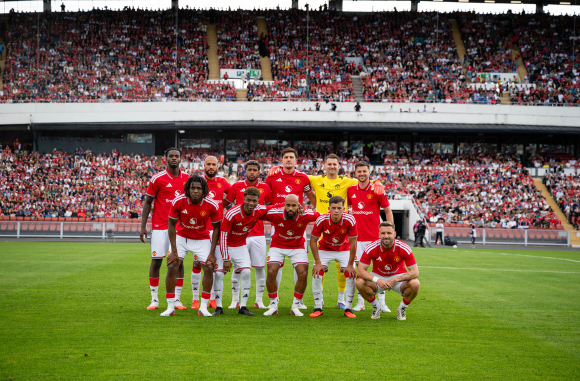
Manchester United round out the top four under the guidance of Michael Carrick. Following a strong finish to the previous season, Carrick’s tactical structure has stabilized Old Trafford. The simulation forecasts United in 4th place with 75.1 points and a 7.3% title chance.
While Chelsea (3.9% title chance) and Tottenham Hotspur (0.4% title chance) remain in the European conversation, both London clubs are predicted to fall short of the elite top-four threshold. Meanwhile, Aston Villa—despite achieving top-four finishes in two of the last three years—have seen their probability of repeating the feat drop to just 3.6%.
Mid-Table Surges and Mid-Table Struggles
Outside of the traditional elite, the simulation reveals several fascinating storylines across the middle order of the table.
Everton’s Steady Rise
Everton stand out as the only club in the bottom half of the table predicted to improve upon their finishing position from last term. Moving up from 13th to 11th place, the Toffees are beginning to build long-term stability under their current framework.
Newcastle United Face a Turbulent Transition
In contrast, Newcastle United are projected to endure another frustrating campaign. Following a turbulent summer transfer window that saw key figures Bruno Guimarães, Sandro Tonali, and Anthony Gordon depart—alongside manager Eddie Howe being replaced by Matthias Jaissle—the Magpies are tipped for a 13th-place finish.
The only silver lining for Newcastle fans? They are still forecasted to finish ahead of arch-rivals Sunderland. Despite Sunderland securing a historic 7th-place finish last season, the supercomputer expects a steep regression down to 15th position.
The Relegation Zone: Newly Promoted Trio Facing Instant Drop
At the bottom end of the standings, the simulation delivers harsh news for the newly promoted Championship sides. For the second time in recent years, all three incoming clubs are projected to suffer immediate relegation back to the second tier.
- 20th Place: Hull City (81.6% Relegation Probability)After securing promotion via the Championship play-offs, Hull City face the steepest uphill battle in top-flight history. The model assigns them a overwhelming 81.6% chance of going straight back down.
- 19th Place: Ipswich Town (47.5% Relegation Probability)Despite showing flashes of resilience, Ipswich struggle to generate enough expected goals against top-flight defensive units.
- 18th Place: Coventry City (43.1% Relegation Probability)Coventry share an identical 43.1% relegation probability with 17th-placed Nottingham Forest, but are tipped to fall just short on goal difference.
Nottingham Forest (now managed by former Crystal Palace boss Oliver Glasner) and Crystal Palace (32.8% relegation risk) remain heavily embroiled in the survival dogfight, while Leeds United look relatively safe in 14th with only a 9.0% chance of dropping.
How Does the Supercomputer Statistical Model Work?
Understanding the methodology behind these numbers helps contextualize why certain teams rank higher than expected:
- 10,000 Monte Carlo Simulations: The model simulates the entire 380-game fixture schedule 10,000 times to account for randomness, red cards, and lucky bounces.
- Expected Goals (xG) & Performance Metrics: Past performance is weighed heavily using underlying attack and defense quality metrics rather than mere final scores.
- Transfer Window Weighting: Squad market value additions and major outgoing transfers alter team ratings dynamically.
- Market Wisdom Integration: Current betting odds and market valuations are blended into the predictive algorithm to refine accuracy.
9. Frequently Asked Questions (FAQs)
Who is predicted to win the Premier League 2026/27 season?
Arsenal are predicted to win the 2026/27 Premier League title with an expected point total of 85.2 and a 50.6% probability of retaining their crown.
How accurate are supercomputer Premier League predictions?
Supercomputer models use Monte Carlo simulations based on statistical metrics like expected goals (xG), team ratings, and transfer business. While highly accurate at identifying probability trends, unforeseen injuries and mid-season managerial changes can impact real-world outcomes.
Which teams are predicted to finish in the top four?
The supercomputer predicts Arsenal (1st), Manchester City (2nd), Liverpool (3rd), and Manchester United (4th) to secure UEFA Champions League qualification.
Which teams are tipped for relegation in 2026/27?
All three newly promoted sides—Hull City (20th), Ipswich Town (19th), and Coventry City (18th)—are predicted to be relegated back to the Championship.
What are Manchester City’s title odds post-Pep Guardiola?
Manchester City are given a 27.5% probability of winning the league, placing them second behind Arsenal as they adapt to a new managerial era.
The 2026/27 Premier League season promises high drama across both ends of the table. From Arsenal’s quest to solidify a modern dynasty to the relentless top-four scramble and the high-stakes survival battle at the bottom, data-driven analytics provide a fascinating preview of what lies ahead.
What do you think of these predictions? Will Arsenal retain the title, or can Manchester City or Liverpool pull off an upset? Join the discussion in the comments below and share your thoughts on where your team will finish this season!
Read more football news and latest updates