

Pakistan hockey defeat England FIH Pro League: Pakistan’s struggle in international hockey continues to deepen after another painful result in the FIH Pro League, where England handed them a defeat that extended their losing streak to 14 consecutive matches. Once regarded as one of the most dominant forces in world hockey, Pakistan now finds itself battling not just opponents on the field but also a growing crisis of confidence, structure, and consistency.
The latest setback against England highlights a wider issue within the national setup. It is no longer about a single match or isolated poor performances; instead, it reflects a prolonged decline in form at the highest level of international hockey.
The FIH Pro League, organized by the International Hockey Federation, brings together the world’s top-ranked teams in a demanding home-and-away format. For Pakistan, however, the tournament has become a harsh reality check, exposing weaknesses in execution, defense, and goal conversion.

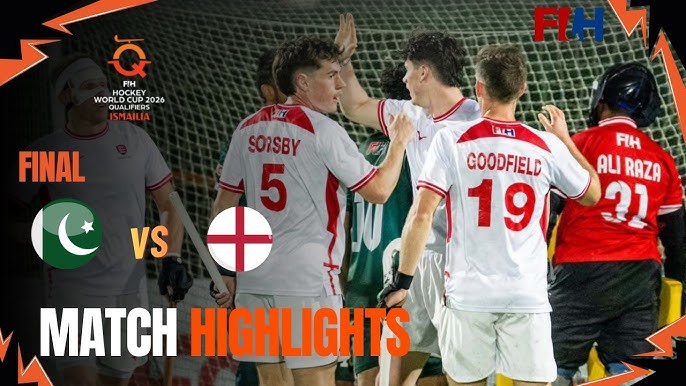
Pakistan hockey defeat England FIH Pro League Ongoing Struggles
Pakistan’s defeat to England is not an isolated incident. It is part of a worrying trend that has stretched across multiple fixtures in the competition. The team’s inability to secure wins has now reached a concerning milestone—14 straight defeats.
Several factors continue to contribute to this decline:
1. Defensive Vulnerability
Pakistan’s defensive structure has consistently struggled against high-pressing teams like England. Quick transitions and penalty corner concessions have repeatedly cost them crucial goals.
2. Lack of Finishing Power
Despite creating occasional scoring opportunities, Pakistan often fails to convert chances into goals. In modern hockey, efficiency in the attacking circle is critical, and this remains a major weakness.
3. Tactical Inconsistency
The team has shown flashes of potential but lacks a consistent tactical identity. Against top-tier teams such as England, even small tactical gaps are heavily punished.
4. Experience Gap
Compared to established European sides, Pakistan’s squad still appears in transition, with younger players adjusting to the pace and physical demands of elite competition.
England’s Controlled Performance and Tactical Strength
England’s victory reflects the strength of their structured and disciplined hockey system. Known for their organized pressing, fast ball movement, and penalty corner efficiency, England have consistently remained among the top contenders in international hockey.
In this fixture, England maintained control through:
- High pressing in midfield zones
- Quick ball recovery and transition play
- Effective penalty corner execution
- Strong defensive coordination
While Pakistan showed moments of resistance, England’s tactical discipline ensured they remained in control for most phases of the match.
What the 14th Consecutive Defeat Means for Pakistan Hockey
A 14-match losing streak in a competition as competitive as the FIH Pro League is more than just a statistic—it signals a deeper structural issue.
Declining International Standing
Pakistan’s position in world hockey rankings continues to suffer as losses accumulate. Each defeat reduces confidence and makes future fixtures even more challenging.
Psychological Pressure on Players
Extended losing streaks often impact player morale. Confidence on the field plays a crucial role in decision-making, and repeated setbacks can create hesitation in critical moments.
Question Marks Over Development Path
The results raise serious questions about grassroots development, coaching structures, and long-term planning within Pakistan hockey.
Historical Perspective: From Dominance to Decline
Pakistan was once a global powerhouse in field hockey, with multiple World Cup titles and Olympic medals. The nation’s legacy includes producing some of the greatest players in hockey history.
However, the modern era tells a different story. Over the past two decades, Pakistan has struggled to keep pace with evolving tactical systems, fitness standards, and investment in the sport.
The contrast between past dominance and present struggles is stark:
- Earlier era: world champions and Olympic contenders
- Current era: rebuilding phase with inconsistent results
The FIH Pro League has further highlighted this gap by placing Pakistan against the world’s most advanced hockey systems on a regular basis.
Key Challenges Facing Pakistan Hockey
1. Infrastructure and Investment Gaps
Modern hockey demands advanced training facilities, analytics, and sports science support. Pakistan continues to lag in these areas compared to European teams.
2. Domestic Competition Quality
A strong national league is essential for producing international-level players. Limited competitive exposure affects player development.
3. Coaching and Tactical Evolution
Modern hockey has evolved into a fast, structured, and highly analytical game. Adapting to these changes remains a challenge.
4. Fitness and Speed Demands
International hockey now emphasizes speed, endurance, and quick transitions. Pakistan often struggles to match the physical intensity of top teams.
England vs Pakistan: Tactical Breakdown
Even without focusing on a single scoreline, the tactical contrast between the two sides is clear.
England’s Strengths:
- Structured defensive blocks
- Rapid counterattacks
- Efficient penalty corner conversion
- High pressing intensity
Pakistan’s Weaknesses:
- Defensive gaps under pressure
- Slow transition from defense to attack
- Missed scoring opportunities
- Lack of sustained possession control
This tactical imbalance has been a recurring theme throughout Pakistan’s FIH Pro League campaign.
Impact on FIH Pro League Standings
The result further compounds Pakistan’s position at the lower end of the FIH Pro League standings. Continuous losses mean:
- No accumulation of ranking points
- Increased pressure in upcoming fixtures
- Reduced qualification prospects for future tournaments
For England, the win strengthens their position in the competition and reinforces their consistency in international hockey.
Future Outlook for Pakistan Hockey
Despite the disappointing results, there is still a pathway forward for Pakistan hockey. However, it requires structured reforms and long-term planning.
Key Areas for Improvement:
- Strengthening defensive systems
- Improving penalty corner defense and attack
- Investing in youth development programs
- Increasing international exposure for players
- Hiring experienced international coaching staff
Rebuilding will not happen overnight, but consistent effort and strategic changes can help restore competitiveness.
Frequently Asked Questions (FAQs)
1. What happened in Pakistan vs England FIH Pro League match?
Pakistan suffered another defeat against England in the FIH Pro League, extending their losing streak to 14 matches.
2. How many matches has Pakistan lost in a row?
Pakistan has now lost 14 consecutive matches in the FIH Pro League.
3. Why is Pakistan struggling in hockey?
Key issues include defensive weaknesses, poor finishing, lack of consistency, and limited modern tactical adaptation.
4. Is Pakistan hockey improving?
There are signs of effort and young talent, but results show the team is still in a rebuilding phase.
5. What is the FIH Pro League?
The FIH Pro League is an international field hockey competition featuring the world’s top national teams in a league format.
6. Can Pakistan recover in future tournaments?
Yes, but it requires long-term investment in coaching, infrastructure, and player development.
7. How strong is England in hockey?
England is considered one of the top hockey nations with strong tactical discipline and consistent international performance.
8. What is Pakistan’s biggest issue in hockey today?
The biggest issue is inconsistency combined with outdated tactical execution compared to modern international standards.
Pakistan’s defeat to England in the FIH Pro League marks another difficult chapter in the team’s ongoing struggles at the international level. With 14 consecutive losses now recorded, the situation highlights the urgent need for structural reforms, better preparation, and long-term investment in the sport.
While the current phase is undeniably challenging, Pakistan hockey still carries a rich legacy that can serve as a foundation for rebuilding. With the right planning and development strategy, a return to competitiveness is possible—but it will require patience, discipline, and decisive action.
The road ahead is difficult, but not impossible.