


Pakistan Football Blueprint: The narrative of global football is undergoing a profound shift. Historically, the upper echelons of international football were reserved for countries with decades of institutionalized sporting culture or immense populations. However, modern football has democratized the field. Small nations are consistently proving that structured development beats historical prestige.
When a small nation punches above its weight on the global stage, it serves as a wake-up call for developing football ecosystems worldwide. For Pakistan, a country of over 240 million people currently sitting at 198th in the FIFA rankings, this paradigm shift offers both inspiration and a concrete blueprint.
Building a sustainable football infrastructure from scratch requires moving away from quick fixes. The focus must pivot toward systematic, long-term athletic development. True progress is built by designing grassroots programs, updating coaching education, and creating structured player pathways that ensure talent is nurtured rather than lost to administrative gaps.
Restructuring the Pakistani Football Pyramid
A functional national team is merely the tip of an iceberg. Beneath the surface lies a complex, interconnected pyramid of local, regional, and national competitions. Without these layers, the elite tier inevitably collapses. To fix this, Pakistan’s sporting leadership is introducing a comprehensive systemic overhaul.
The primary challenge facing Pakistani football has been the lack of a sustainable domestic ecosystem. The absence of a regular, year-round professional league creates a massive competitive gap for senior athletes. While macro-level institutional changes take time, the strategic focus is moving toward preparing the technical framework necessary to sustain professional structures.
A healthy ecosystem relies on establishing strict technical baselines. By aligning youth tournaments with club registration protocols, building digitized player monitoring databases, and standardizing performance metrics across all age brackets, the foundation is being laid for a system where every level actively feeds into the next.
The Grassroots Engine: Pakistan Football Scalable Talent Identification
Talent in Pakistan is widely distributed across diverse terrains, from the urban streets of Karachi to the rugged pitches of Balochistan. The historical failure has not been a lack of raw talent, but a lack of structural access.
To bridge this gap, a decentralized, nationwide scouting framework is being rolled out. This project relies heavily on activating regional scouts and provincial associations to venture beyond traditional scouting hubs.
The Standardized Identification System
To ensure objectivity and continuity, scouts utilize a unified talent assessment rubric focusing on four core pillars:
+---------------------------------------------------------------+
|               FOUR PILLARS OF YOUTH SCOUTING                  |
+---------------------------------------------------------------+
|  1. TECHNICAL COMPOSURE  | Ball control, spatial awareness,   |
|                          | and passing accuracy under pressure|
+--------------------------+------------------------------------+
|  2. TACTICAL INTELLIGENCE| Understanding phases of play and   |
|                          | positioning without the ball       |
+--------------------------+------------------------------------+
|  3. PHYSICAL LITERACY    | Agility, acceleration, and         |
|                          | long-term biological durability    |
+--------------------------+------------------------------------+
|  4. PSYCHOLOGICAL DRIVE  | Mental resilience, coachability,   |
|                          | and emotional maturity             |
+---------------------------------------------------------------+
By digitizing these metrics into a centralized player database, the federation can track a prospect’s development over years. This effectively eliminates the risk of elite athletes falling through the cracks simply due to their geographical location.
Elevating Coaching Standards as a High-Return Investment
Player development is directly bottlenecked by the quality of instruction they receive. Investing in coach education yields massive dividends; a single highly trained coach can positively influence hundreds of young athletes over their career.
Pakistan possesses a dedicated community of local coaches who have operated for years without access to modern methodology. The new technical directive aims to heavily decentralize coaching courses, making intermediate and advanced certifications accessible outside major metropolitan cities.
Beyond standard licensing, the revised curriculum introduces ongoing professional mentoring and continuous development workshops. By building knowledge-sharing networks between local instructors and international technical experts, the country is rapidly modernizing its training methodologies. The goal is clear: to ensure that the instruction a twelve-year-old receives in rural Pakistan mirrors elite global standards.
Infrastructure: Optimizing Existing Spaces
Building state-of-the-art stadiums and pristine academy pitches is an expensive, multi-year endeavor. While long-term infrastructure partnerships with government and corporate sectors are critical, immediate progress cannot wait for perfect facilities.
Many successful footballing nations established their foundations using modest infrastructure. The short-term strategy focuses on maximizing existing assets through creative public-private partnerships, collaborating with educational institutions, and securing community access to existing pitches.
Concurrently, human capital development must helpfull for parallel to facility upgrades. Better pitches are useless without qualified coaches to manage them, and elite coaches need functional surfaces to maximize player growth. Balancing these priorities ensures that resources are allocated efficiently.
Redefining International Exposure for Youth Development
Youth development programs frequently encounter harsh realities when transitioning to the international stage. Recent exposures, such as the Under-16 national team competing in UEFA developmental tournaments in Central Asia, underscore the massive step up in competitive intensity.
While initial scorelines against elite foreign academies can be humbling, these matches provide invaluable diagnostic data. Exposure to the rapid tempo, intense physicality, and rigid tactical discipline of international football shows young players exactly what is required at the highest level.
The critical phase begins after these tournaments conclude. Rather than disbanding youth cohorts after an event, the technical plan prioritizes keeping these developmental squads together. By maintaining consistent training camps and ensuring a steady stream of competitive match minutes, these players can eventually transition smoothly into the senior national team pool.
The Growth Pathway for Women’s Football

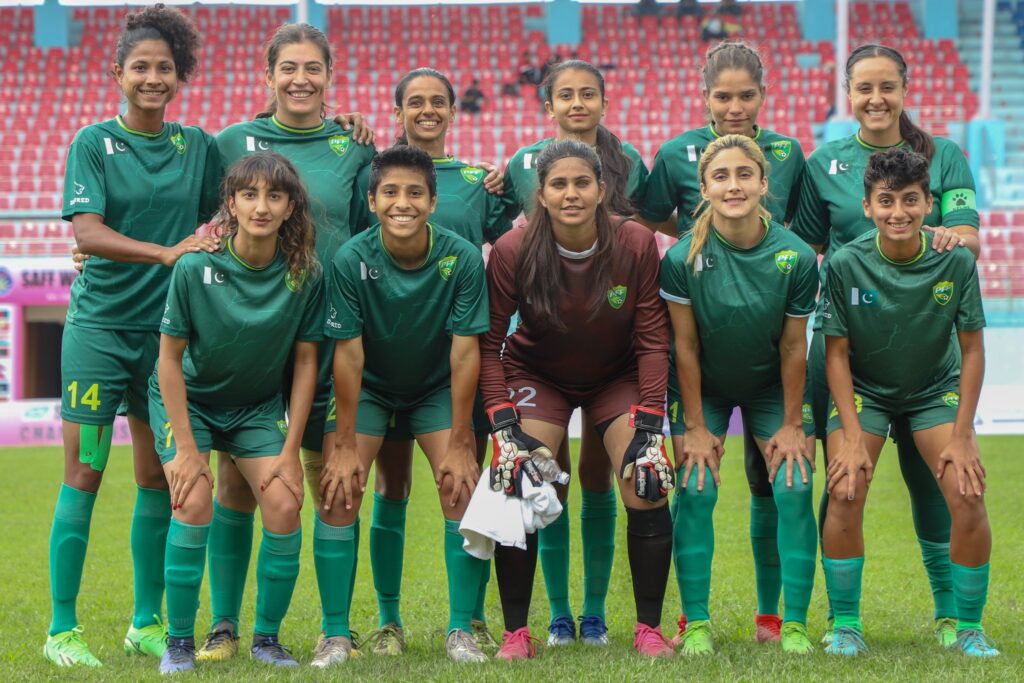
The Pakistani women’s national team has shown exceptional promise, highlighted by historic milestones in international showcase events and commanding clean-sheet victories against global opposition. However, technical leaders stress that these achievements must serve as a launching pad rather than a final destination.
To build an enduring program that outlasts any single generation of players, the technical department is building an expansive competitive pipeline for female athletes.
       [ Elite Senior National Team Selection ]
                         ▲
                         │
        [ U-19 and U-16 Youth National Squads ]
                         ▲
                         │
     [ Standardized Regional & School Leagues ]
                         ▲
                         │
[ Grassroots Clinics & Local Talent Pools (Ages 6-12) ]
Simultaneously, the federation is fast-tracking the development of female coaches, referees, and sports scientists. By establishing a dedicated sporting ecosystem, women’s football can transform from a periodic success story into a sustainable powerhouse.
Strategic Planning for the World Cup Qualification Cycles
International football runs on strict four-year cycles. For emerging nations, preparing for these high-stakes windows requires meticulous scheduling and administrative foresight. Success in qualifiers is won long before the teams step onto the pitch.
For lower-ranked nations, the qualification journey is unforgiving, often starting with high-pressure, two-legged knockout rounds where a single mistake can derail years of planning. Advancing past these initial hurdles requires a highly organized senior team camp strategy.
                      QUALIFICATION ROADMAP

  Phase 1: Scout & Standardize (Months 1-12)
  ├── Deploy decentralized national scouting network
  └── Establish digital player databases across all regions

  Phase 2: Build Competitive Depth (Months 13-24)
  ├── Launch synchronized regional and youth championships
  └── Integrate elite domestic talent with overseas players

  Phase 3: High-Intensity Preparation (Months 25+)
  ├── Arrange targeted international friendlies
  └── Execute specialized tactical preparation camps
The roadmap focuses on building long-term roster continuity and intelligently integrating eligible overseas diaspora talent playing in established foreign leagues. Blending domestic grit with international tactical experience allows the national team to steadily climb the FIFA rankings and consistently challenge the continent’s established football powers.
Frequently Asked Questions
Why is a technical director so critical for sports development?
A technical director acts as the chief architect of a sports organization’s football philosophy. While national team managers focus on short-term match results, the technical director designs long-term player pathways, coaching education systems, and youth scouting structures to ensure sustainable development.
How does Pakistan plan to discover talent in remote regions?
The federation is deploying a decentralized scouting network, working closely with provincial associations and regional scouts. By using standardized testing metrics and saving data to a centralized database, the system ensures talented players are evaluated objectively regardless of their location.
What steps are being taken to improve local football coaching?
The new strategy prioritizes expanding licensing courses across all provinces, introducing continuous professional development seminars, and establishing mentorship links between domestic coaches and elite international technical experts.
Why are international youth development tournaments important if the team loses?
At the youth level, international tournaments are primarily diagnostic tools. They expose young athletes to the speed, physical demands, and tactical complexities of global football, highlighting the exact areas where domestic training systems need to adapt.
How can football infrastructure improve without massive budgets?
The immediate strategy focuses on maximizing existing facilities by partnering with educational institutions, municipal bodies, and private sports complexes, ensuring that human development runs parallel with physical upgrades.
What is the long-term vision for the women’s national football team?
The goal is to move past isolated tournament successes by creating a complete pipeline. This includes establishing regular youth leagues, increasing the number of certified female coaches, and creating dedicated developmental pathways from grassroots to the senior squad.
Conclusion
Rebuilding a nation’s football identity from the ground up is a grueling marathon that demands patience, structural discipline, and absolute transparency. By focusing on grassroots expansion, comprehensive coaching reforms, and rigorous technical standards, Pakistan is creating a scalable blueprint for long-term sporting transformation. The ultimate goal is to build an organized, sustainable development system that consistently produces elite talent for generations to come.
Read more football news and latest updates