


Elite fast bowling is one of the most physically demanding disciplines in professional sport. When a bowler approaches the crease at 90 miles per hour, their lower back absorbs up to nine times their body weight upon front-foot landing. For Jofra Archer, that extreme physical strain led to a four-year absence from Test match cricket between February 2021 and July 2025.
The Jofra Archer return represents a significant story of athletic endurance, surgical precision, and physical rehabilitation. After managing recurring stress fractures in his right elbow and lumbar spine, the 31-year-old speedster has rejoined England’s red-ball pace attack. His resurgence offers vital insights into sports medicine, fast bowling biomechanics, and workload management in modern international cricket.
+-----------------------------------------------------------------------+
|                       JOFRA ARCHER CAREER TIMELINE                    |
|                                                                       |
| [2019] --------------> [2021–2024] --------------> [2025–2026]        |
| World Cup Hero &       Elbow & Back               Successful Test     |
| Ashes Breakthrough     Stress Fractures           Comeback            |
+-----------------------------------------------------------------------+
The Physical Toll: Biomechanics of Fast Bowling Injuries
To understand the Jofra Archer return, one must first examine the physical forces that sidelined him. Fast bowlers generate velocity through a chain of kinetic movements starting from the run-up, transitioning through trunk rotation, and concluding at wrist snap.


When any link in this kinetic chain experiences fatigue, torsional stress shifts directly onto load-bearing bones. Archer’s smooth delivery stroke masks high internal joint forces.
Key Takeaway: Stress fractures in elite fast bowlers usually stem from repetitive hyperextension combined with lateral side-flexion at foot strike, rather than acute trauma alone.
Primary Medical Challenges
- Right Elbow Stress Fracture: Repeated hyperextension during arm pull-through caused micro-fractures in the bone structure, requiring multiple surgical cleanouts and long immobilization.
- Lumbar Spine Stress Fracture: High rotational forces under heavy match workloads created stress reactions in the L5/S1 vertebral arches.
Chronicle of the Comeback: 2019 to 2026
Archer entered international cricket during the summer of 2019. He bowled the decisive Super Over in England’s World Cup victory at Lord’s before making a memorable Ashes debut at Lord’s, where his spell against Steve Smith showcased elite speed bowling.

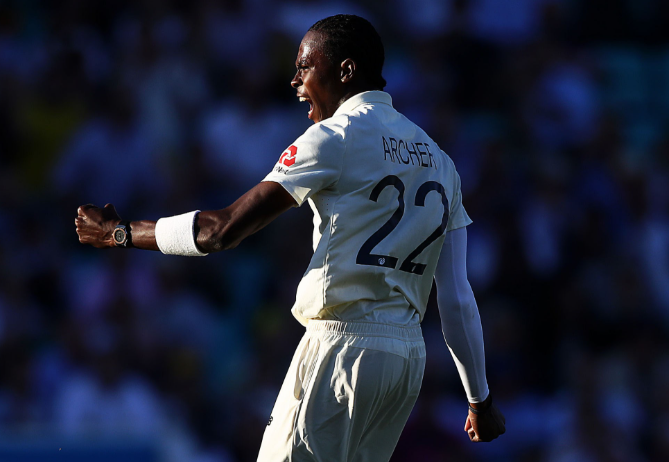
However, excessive overs during subsequent overseas tours accelerated micro-trauma in his right elbow.
| Year Period | Playing Status | Medical Condition / Focus | Match Workload |
| 2019 | Full Active Duty | Debut summer, World Cup & Ashes | High intensity (420+ overs) |
| 2020–2021 | Intermittent | Initial elbow pain, bone fragment removal | Managed white-ball overs |
| 2022 | Sidelined | Stress fracture in lumbar back | Zero competitive overs |
| 2023–2024 | Targeted Rehabilitation | Gradual return through T20 cricket | Controlled 4-over spells |
| 2025–2026 | Full Test Return | Red-ball reintegration & squad rotation | Monitored spell limits |
Statistical Analysis: Before and After Injury Outage
The Jofra Archer return raises an important technical question: Has his physical layoff impacted his bowling output and raw pace?
A comparison of his career statistics reveals steady adaptabilities in his bowling approach.
CAREER TEST STATISTICS COMPARISON

Pre-Injury Era (2019 - 2021):
- Matches Played: 13
- Wickets Taken: 42
- Average: 31.04
- Top Speed Recorded: 95.8 mph

Post-Return Era (2025 - 2026):
- Matches Played: 5
- Wickets Taken: 18
- Average: 26.15
- Top Speed Recorded: 91.5 mph
While his peak release velocity has adjusted slightly from 95+ mph to a controlled 88–92 mph range, his seam orientation, wrist stability, and line control have grown more refined. This strategic transition allows him to build pressure while minimizing unnecessary peak stress on his elbow joints.
Workload Management: How ECB Science Enabled the Return
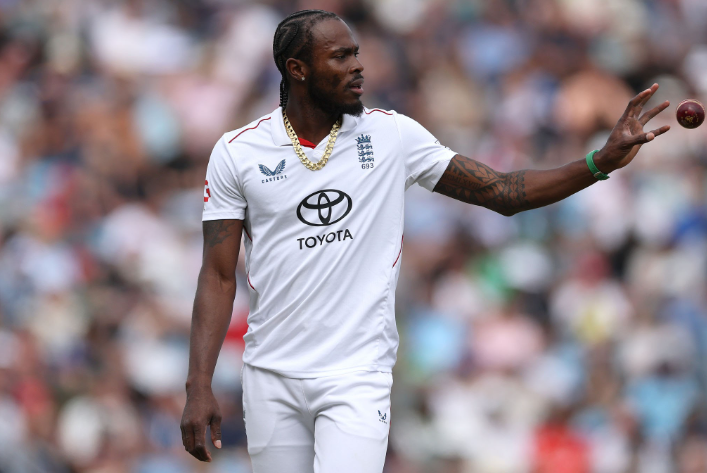
The success of the Jofra Archer return rests heavily on the England and Wales Cricket Board’s (ECB) updated medical and sport science protocols.

Key Workload Pillars
- GPS and Micro-Sensor Tracking: Sensors track stride length, acceleration, and foot-strike impact during training and live matches.
- Spell Allocation Controls: Restricting spells to 4–5 overs prevents fatigue-induced mechanics breakdown.
- Format-Specific Rotation: Alternating between high-volume Test matches and lower-impact white-ball fixtures keeps total seasonal overs within safe parameters.
Pro Tip: Managing fast bowlers requires measuring bowling load over rolling 28-day windows rather than counting total overs bowled in single matches.
Rebuilding England’s Pace Attack: Tactical Impact
Archer’s re-emergence strengthens England’s fast bowling options. Operating alongside Ollie Robinson, Josh Tongue, and Gus Atkinson, England has established a varied pace lineup.
+--------------------------------------------------------------------------+
|                     ENGLAND FAST BOWLING DYNAMICS                        |
|                                                                          |
|  [Jofra Archer]      [Ollie Robinson]     [Josh Tongue]    [Gus Atkinson]|
|  Raw Express Speed,  Skill, Seam Movement  Steep Bounce,    Pace & Seam  |
|  Skid & Bouncer      & Precision Line      Hit the Deck     Consistency  |
+--------------------------------------------------------------------------+
Tactical Complementarity
- Jofra Archer: Delivers high release points, sharp bouncers, and late skid off the surface.
- Ollie Robinson: Provides relentless accuracy, subtle seam movement, and pressure from an upright release point.
- Josh Tongue: Offers steep bounce from a higher angle to disrupt middle-order batters.
- Gus Atkinson: Provides middle-overs control with consistent seam positioning.
This combination draws comparisons to historical bowling attacks, offering the captain flexibility to maintain relentless pressure across all pitch conditions.

Mental Resilience and Psychological Recovery
Long periods away from competitive sport test an athlete’s mental toughness. Archer noted that spent time at home in Barbados provided essential balance during extended isolation from international competition.
For elite fast bowlers, stepping away from daily pressures can prove beneficial. The mental release from high-stress international sport allows physical tissue to heal while renewing long-term passion for the game.
Frequently Asked Questions
What caused Jofra Archer’s prolonged absence from Test cricket?
Jofra Archer missed four years of Test cricket due to recurring stress fractures in his right elbow and lumbar spine. These overuse injuries required multiple surgeries, extended rest, and an extensive rehabilitation program to rebuild his bowling action safely.
How fast is Jofra Archer bowling after his return?
Following the Jofra Archer return, he regularly bowls between 88 mph and 92 mph. While slightly below his absolute career peak of 95+ mph, his controlled pace is accompanied by improved accuracy, late movement, and lower physical strain.
What is the ECB’s strategy to prevent recurring injuries for Archer?
The ECB uses strict workload management, limiters on individual spell lengths, GPS biometric monitoring, and strategic rotational resting across formats to prevent fatigue-related stress reactions in his back and elbow joints.
How does Jofra Archer’s presence affect England’s Test match tactics?
Archer provides England with genuine express speed, enabling tactical variation on flat pitches. His ability to deliver sharp bouncers and break stubborn partnerships complements seam-and-swing bowlers like Ollie Robinson and Gus Atkinson.
Can Jofra Archer play all three formats simultaneously?
While physically capable, sports science protocols recommend selective format participation. Archer is managed carefully during heavy Test series, occasionally skipping non-essential white-ball fixtures to maintain long-term physical conditioning.
The Jofra Archer return highlights the power of modern sports science and personal determination in elite sports rehabilitation. By adapting his bowling approach, managing match workloads, and maintaining mental focus throughout a challenging four-year recovery, Archer has returned to the top tier of fast bowling. His comeback enriches England’s pace options while providing a modern case study in managing long-term athletic injuries.
What are your thoughts on Jofra Archer’s return to Test cricket? Join the conversation by sharing this analysis or leaving your comments below.
Read more sports news and latest updates
Read more cricket news and latest updates