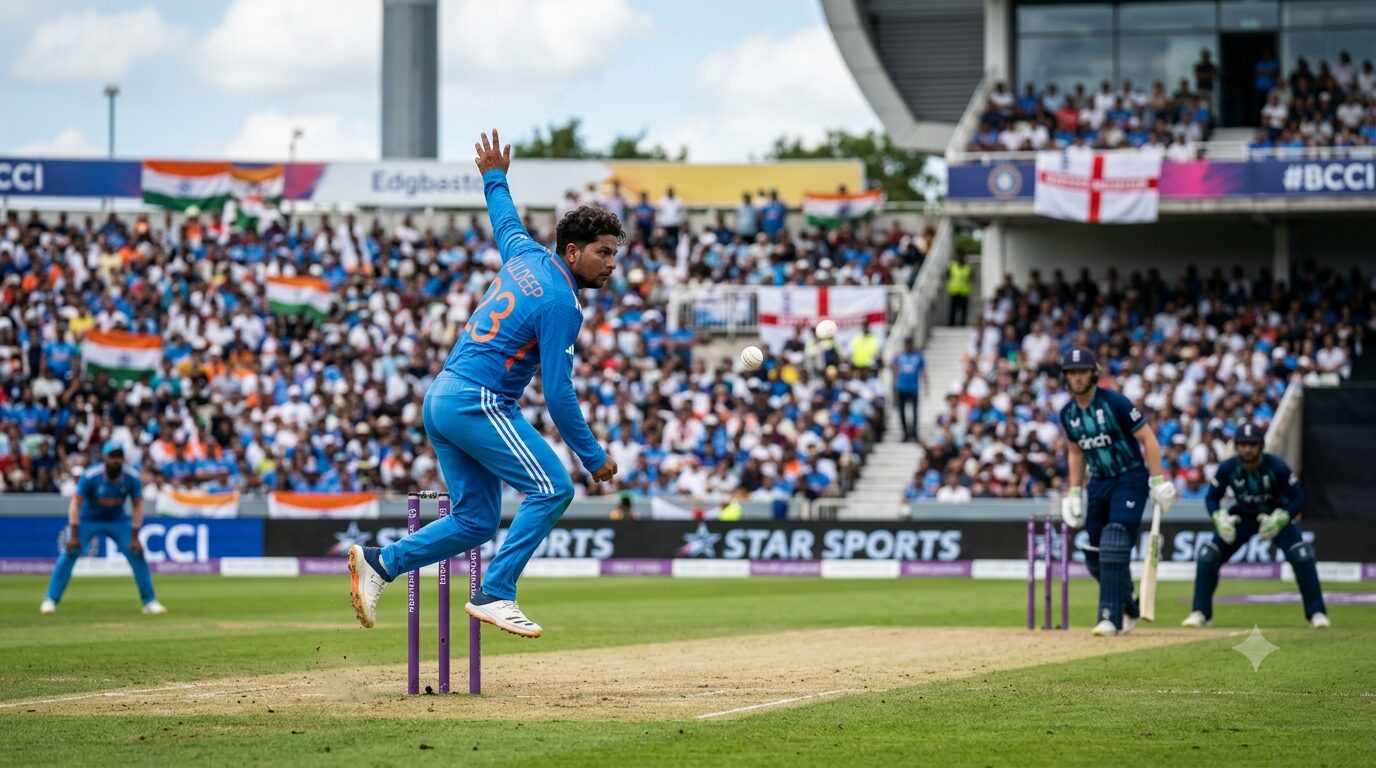
Kuldeep Yadav “Better Treatment”: India’s selection strategies have always triggered intense debate, but when a legendary cricket mind like Ravichandran Ashwin speaks up, the cricketing world stops to listen.
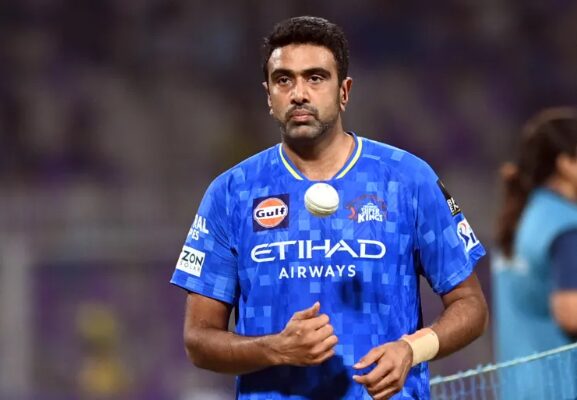
Following India’s first ODI against England, Ashwin raised a critical question regarding how the team management handles wrist spinner Kuldeep Yadav. Despite boasting a formidable record as a proven matchwinner, the 31-year-old left-arm wrist spinner has found himself on the sidelines more often than not in recent games.
With India heavily favoring batting-depth options, Ashwin believes the team’s balance is leaning too far toward safety at the expense of genuine wicket-taking threat.
The Root of the Debate: Selection Dilemmas in ODI Cricket
In the first ODI of the series against England, the team management opted for finger-spinning all-rounders Axar Patel and Washington Sundar. This choice paid off on paper: Axar turned in a stellar performance, claiming 4 wickets for 62 runs and hitting a crucial unbeaten half-century. Sundar supported well, anchoring the chase with a fifty of his own, helping India run down a target of 263 with six wickets in hand.
Yet, despite this clinical win, Ashwin is looking at the bigger picture. He points out that choosing two finger-spinners who offer batting cushion is a short-term luxury that won’t work across all conditions.
“I have an issue with the kind of treatment that Kuldeep Yadav has been given,” Ashwin stated candidly. “We’re having two finger-spinners in conditions that might not have suited spin necessarily.”
The Multi-Format Challenge Ahead
Ashwin argues that while the Axar-Sundar duo succeeded on a favorable pitch, harder challenges await. Upcoming tours, such as a demanding trip to South Africa, will test India’s bowling variety.
In Ashwin’s view, a balanced attack requires playing both types of spinners, but trying to fit both Axar and Sundar into the same starting XI permanently limits the team’s tactical ceiling.
Wrist Spin vs. Finger Spin: A Tactical Analysis
To understand Ashwin’s frustration, one must look at the mechanical differences between wrist-spin and finger-spin, and why a premium wrist-spinner is vital in modern white-ball cricket.

- Wicket-taking Threat in the Middle Overs: Left-arm wrist-spin (often called chinaman bowling) generates sharper turn and bounce on flat decks compared to traditional finger-spin.
- Adversity in Flight: While finger-spinners focus on economy and tight lines, wrist-spinners use variations like the googly and drift to deceive batsmen in the air.
- Batting Depth Bias: Modern limited-overs cricket heavily emphasizes having batsmen down to number 8 or 9. However, picking a bowler primarily for their batting can weaken the primary bowling unit’s ability to take 10 wickets.
| Spinner Type | Primary Strength | Weakness / Risk | Ideal Role |
| Wrist Spin (e.g., Kuldeep Yadav) | Sharp turn, wicket-taking ability, deception | Higher economy rate on off-days | Attacking middle-overs enforcer |
| Finger Spin (e.g., Axar Patel / Washington Sundar) | Line and length control, lower economy, lower order batting | Predictable on flat wickets | Defensive container & stabilizer |
Learning from England’s Balanced Blueprint
To drive home his point, Ashwin highlighted England’s approach during the very same match in Birmingham.
England did not field identical finger-spinning styles. Instead, they balanced their attack by pairing an all-rounder with a specialist attacking threat:
- Will Jacks: Offered finger-spin container overs while lengthening the batting lineup.
- Adil Rashid: Acted as the primary, attacking leg-spinner tasked with breaking partnerships in the middle overs.
Ashwin believes this is the exact template India should follow. Rather than selecting both Axar and Sundar to bulk up the batting order, India should choose only one of them to play alongside an aggressive wicket-taker like Kuldeep.
Frequently Asked Questions
Why is Kuldeep Yadav being benched despite his good record?
India’s team management currently prioritizes batting depth in ODI cricket. Playing finger-spinners like Axar Patel and Washington Sundar allows India to have reliable batsmen down to number 8, which often forces specialist bowlers like Kuldeep to the bench.
What is Ravichandran Ashwin’s main argument?
Ashwin argues that Kuldeep Yadav is a premier matchwinner who deserves consistent backing. He believes India only has room for one finger-spinning all-rounder (either Axar or Sundar) in the XI, and that a specialist attacking spinner like Kuldeep must be played to maintain balance.
How did Axar Patel and Washington Sundar perform in the first ODI against England?
Both players performed exceptionally well. Axar took 4 wickets for 62 runs and scored an unbeaten fifty. Washington Sundar also scored a half-century, ensuring India comfortably chased down 263 runs.
Why does Ashwin believe Kuldeep Yadav will be crucial in South Africa?
South African pitches generally offer less natural assistance to traditional finger-spin. On bouncy, pace-friendly tracks, the extra flight, dip, and unpredictable wrist-spin of Kuldeep Yadav are far more likely to trouble world-class batsmen.
Conclusion
Ravichandran Ashwin’s critique shines a spotlight on a classic cricketing dilemma: Should a team pick a lineup to avoid defeat (batting depth), or should they pick a lineup to win (specialist wicket-takers)?
While safety-first selections might yield comfortable wins at home, championship-winning sides are built on dynamic variety. For India to remain dominant across all global conditions, giving Kuldeep Yadav the trust and “better treatment” he deserves is not just fair—it is tactically essential.
Read more cricket news and latest updates